Target Launch Date: April 1, 2026.
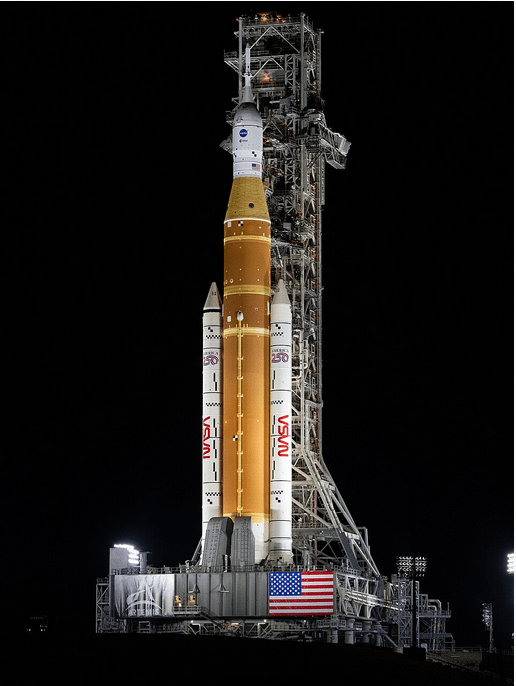
Launch Window: If the April 1st date slips, there are several “launch opportunities” in early April (specifically April 1, 3, 4, 5, and 6) based on the alignment of the Earth and Moon.
https://en.wikipedia.org/wiki/Artemis_II
Mission Duration: Approximately 10 days, ending with a splashdown in the Pacific Ocean.
For the upcoming Artemis II mission (targeted for 2026), the short answer is: Yes, but it will be much harder than in the Apollo era.
Will HAMs hear them?
While you won’t be able to “tune in” with a standard handheld radio to hear the astronauts chatting, dedicated amateur radio operators with specialized equipment are actively preparing to track and receive signals from the Orion spacecraft.
The primary communication for Artemis II happens on the S-band (2.2–2.3 GHz) and via a new high-speed Optical (laser) Communications System (O2O).
- Public Access: You cannot hear them directly on standard VHF/UHF ham frequencies. However, many ham radio clubs (like those at NASA’s Johnson and Goddard Space Centers) often rebroadcast mission audio on local repeaters (e.g., 146.640 MHz in Houston or 147.450 MHz in Maryland) during major mission phases.
- Encryption: Much of the modern voice and data telemetry is digital and encrypted for security and mission integrity, meaning even if you “catch” the signal, it would sound like white noise without a NASA-authorized decoder.
How Ham Operators are Involved
Interestingly, NASA has officially invited the amateur radio community to help track the mission. They are seeking volunteers for Passive Doppler Tracking.
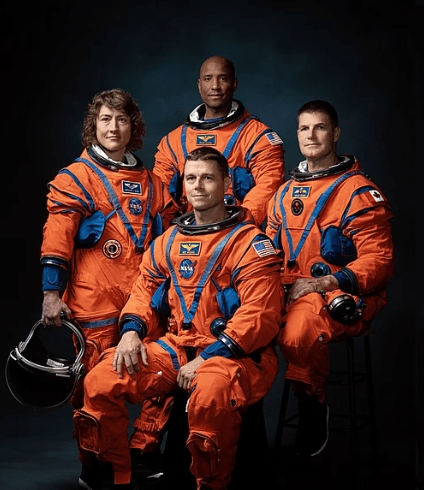
Reid Wiseman (Commander): KF5LKT
Victor Glover (Pilot): KI5BKC
Jeremy Hansen (Mission Specialist): KF5LKU
The fourth crew member, NASA astronaut Christina Koch, is not a licensed amateur radio operator.
- The Goal: By measuring the “Doppler shift” (the slight change in frequency as the spacecraft moves toward or away from Earth), hams can help NASA refine the spacecraft’s velocity and trajectory data.
- The Gear: To participate, operators typically use large satellite dishes (often 1.2 meters to 4.5 meters or larger) and Software Defined Radios (SDRs) capable of receiving the S-band spectrum (specifically around 2210.5 MHz).
- The Crew: Three of the four Artemis II astronauts—Reid Wiseman (KF5LKT), Victor Glover (KI5BKC), and Jeremy Hansen (KF5LKU)—are licensed ham radio operators. While there are no official plans for a “Ham contact” from the Moon yet, the community is hopeful for a potential surprise greeting.
Comparison: Apollo vs. Artemis II
| Feature | Apollo Missions (1960s/70s) | Artemis II (2026) |
| Primary Link | Unified S-Band (Analog/Digital) | S-Band & Infrared Laser (O2O) |
| Data Rate | ~51.2 kbps | Up to 260 Mbps |
| Accessibility | Unencrypted; “Eavesdropping” possible | Highly Encrypted; Proprietary Digital Modes |
| Ham Role | Independent monitoring | Official NASA collaboration (Doppler studies) |
Summary for Hobbyists
If you have a 2.4 GHz dish and an SDR, you can try to “see” the signal spike on a waterfall display as Orion travels to the Moon. If you just want to hear the crew, your best bet is to listen to the NASA TV live stream or find a local ham repeater that is rebroadcasting the audio feed.
 Coos County Radio Club
Thanks! Fun.
ki7pon
LikeLike
I thought so too.
And disappointing that there isn’t more of an amateur radio component. I mean, what are those folks doing for 10 days. That’s 50 person-days of time and they couldn’t find time to do a little VHF?
;-)
LikeLike