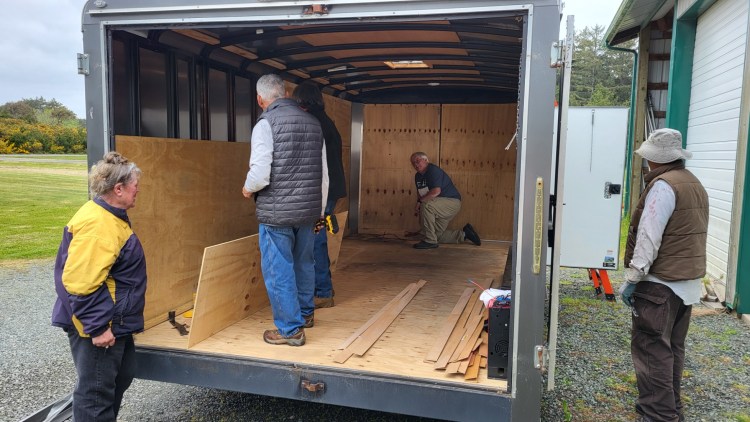
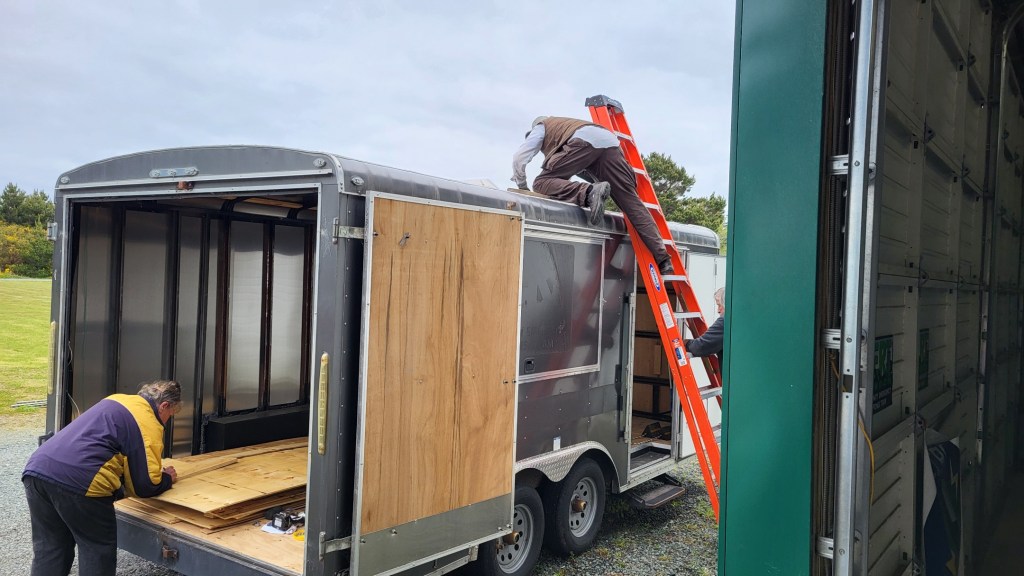
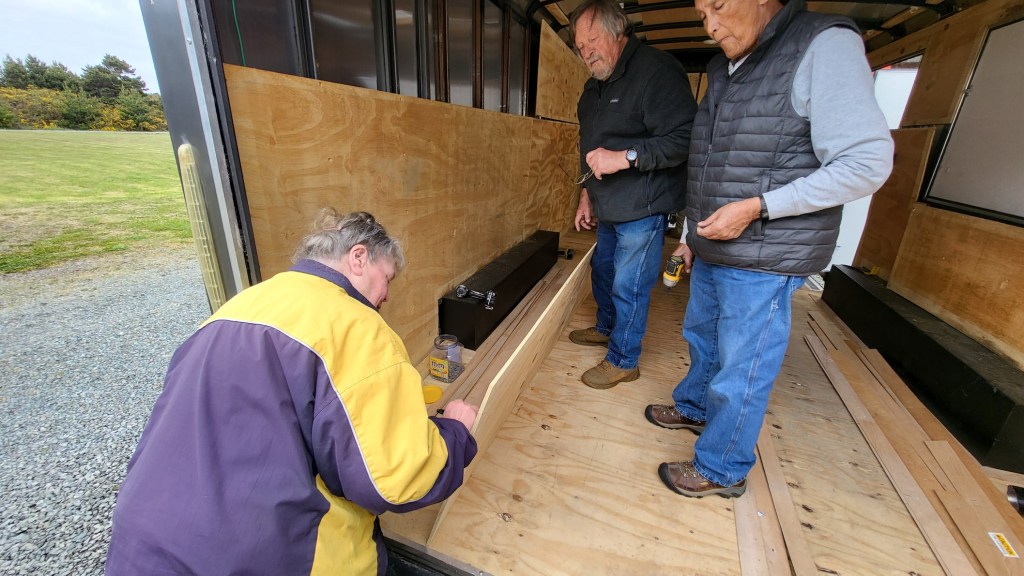
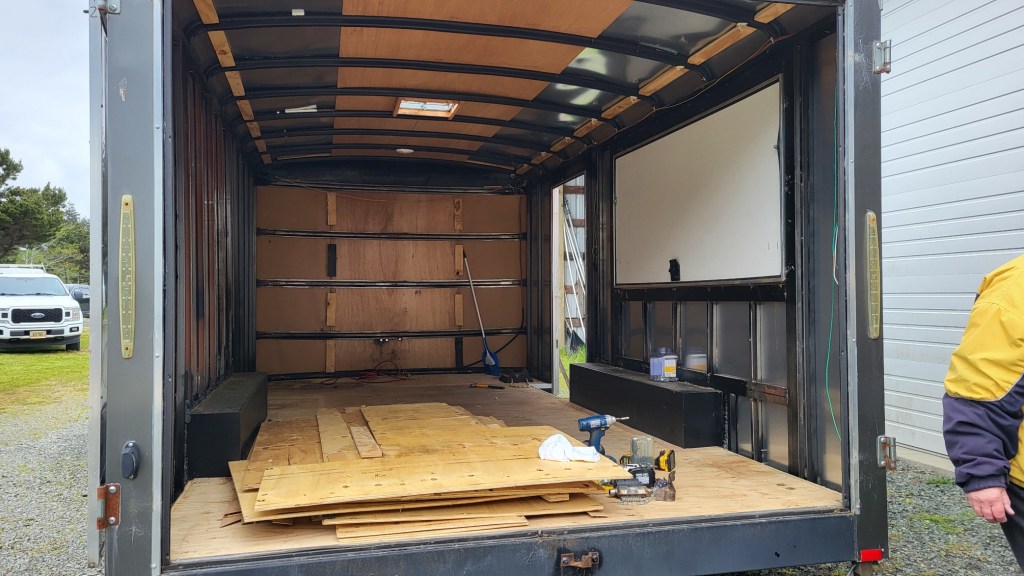
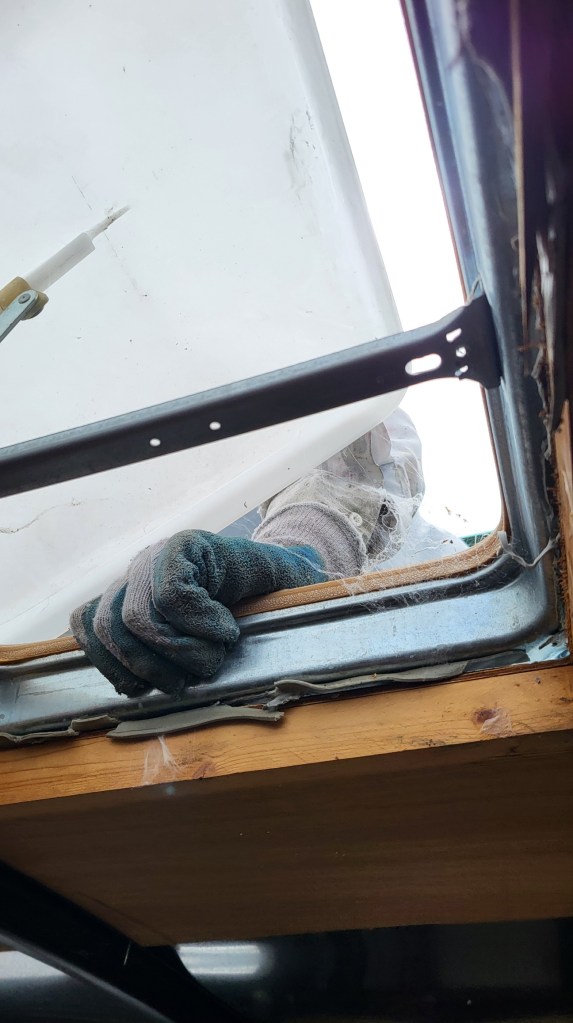
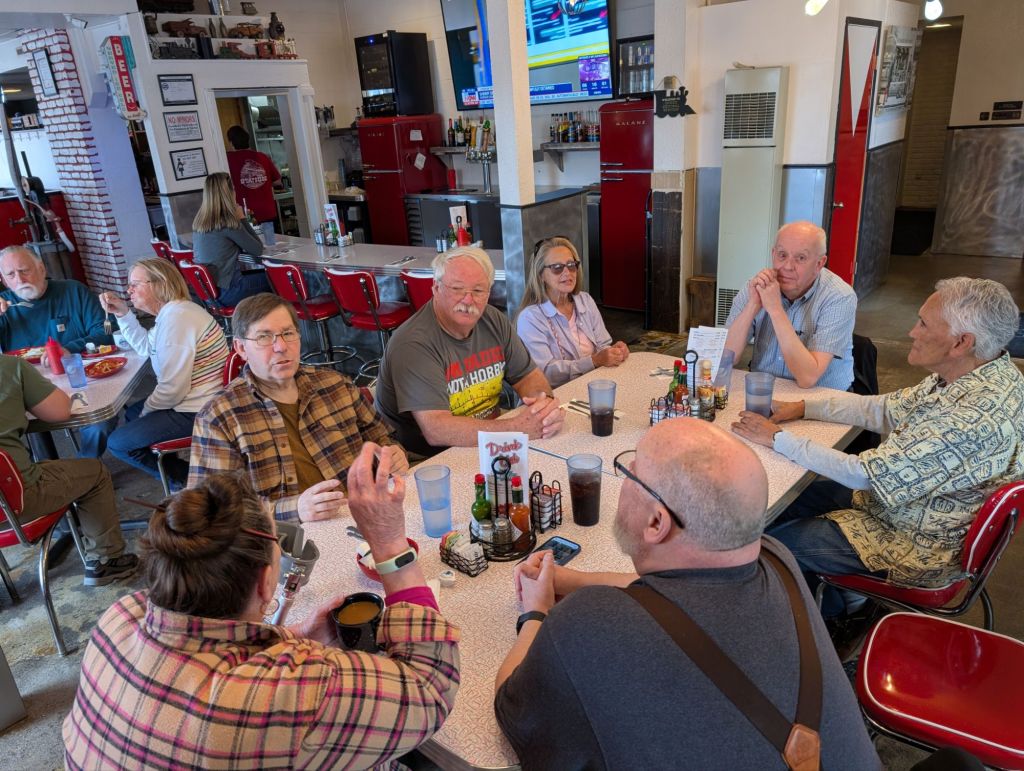
On Thursday April 23rd a group of club members got together for a couple of hours at Gary N6BLU’s place. On the agenda was removal of the solar panels, brackets, the leaky roof vent, and removing the paneling inside so we can install insulation and some new wiring for lights behind the walls.
Thanks to Tim KD7WD, Dave KA6BIM, Bruce AC7IR, Sonny KJ7BFY & Bev KJ7KMG, for coming out and getting it all done in a very timely fashion. All the panels and trim pieces inside were very carefully taken down and labeled as to where they go so re-installing should be a breeze.
We plan on having these work parties weekly on Wednesday or Thursday or both until it’s complete. Of course weather dependent. Will post on Monday’s to email and on the website for day and times of that weeks work party.
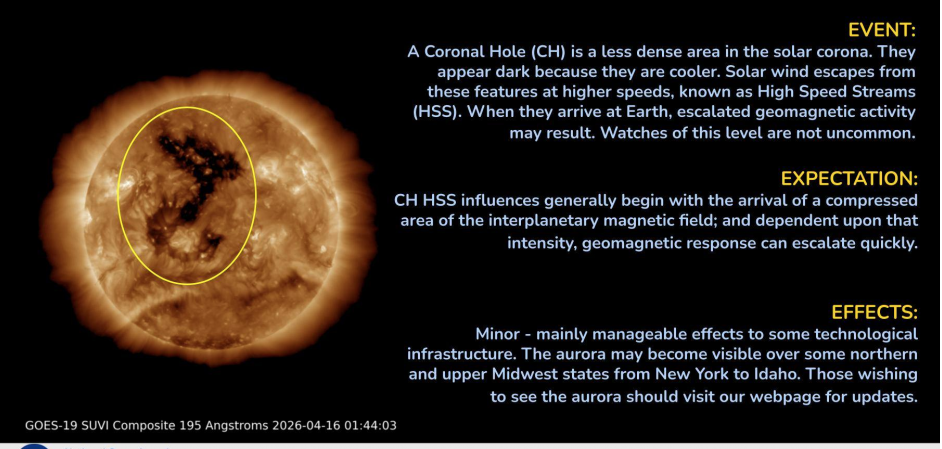
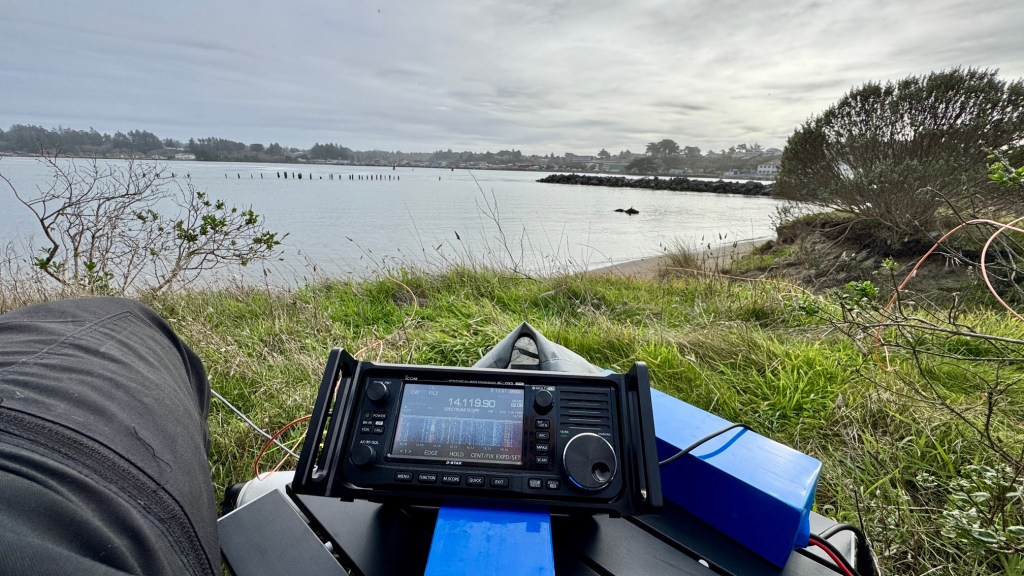
On Saturday April 18th, an immense Solar Coronal hole was pointed directly at earth. HF Conditions Suffered. Members still got out the weather being genuinely fine. Here are their briefings
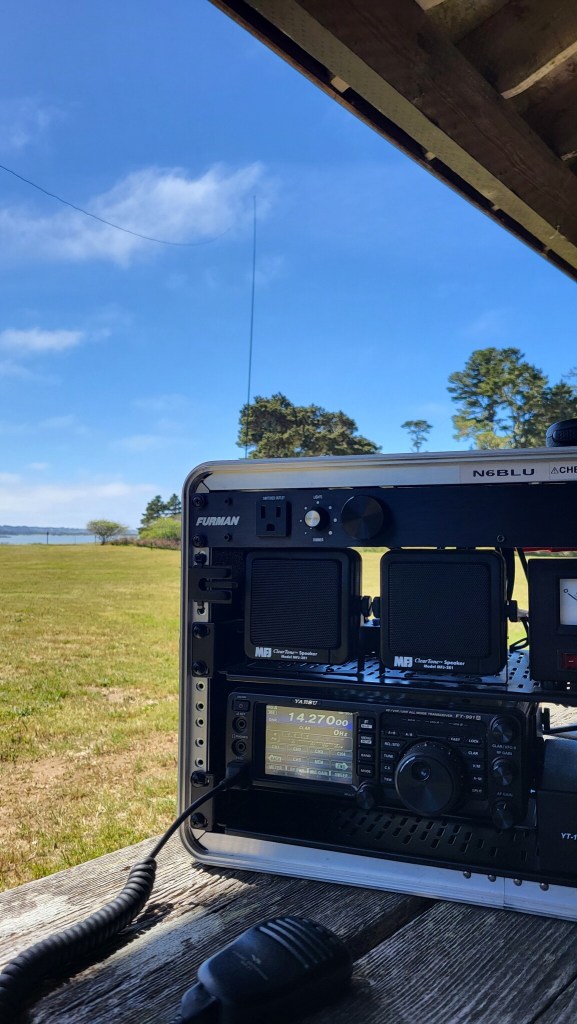
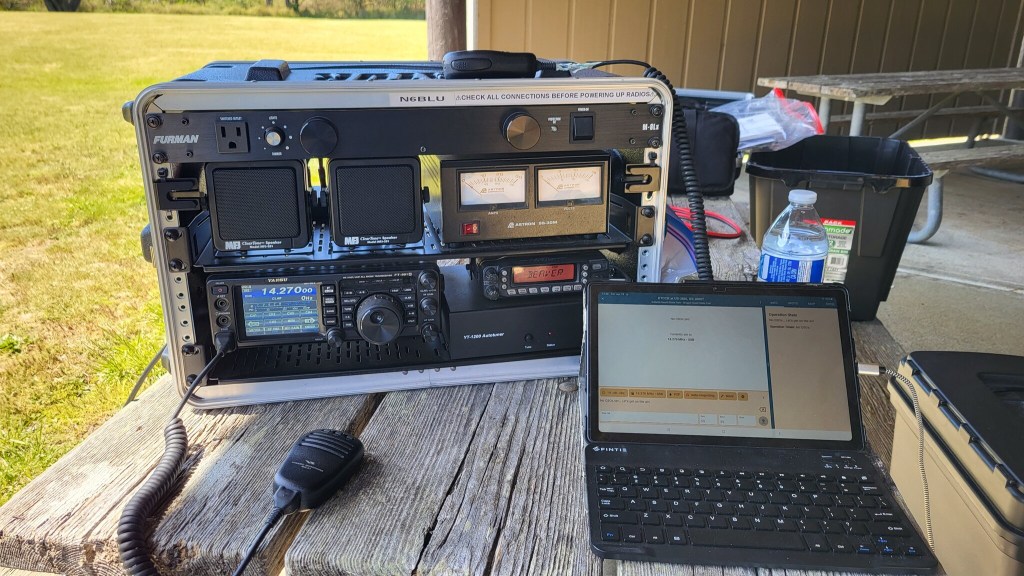
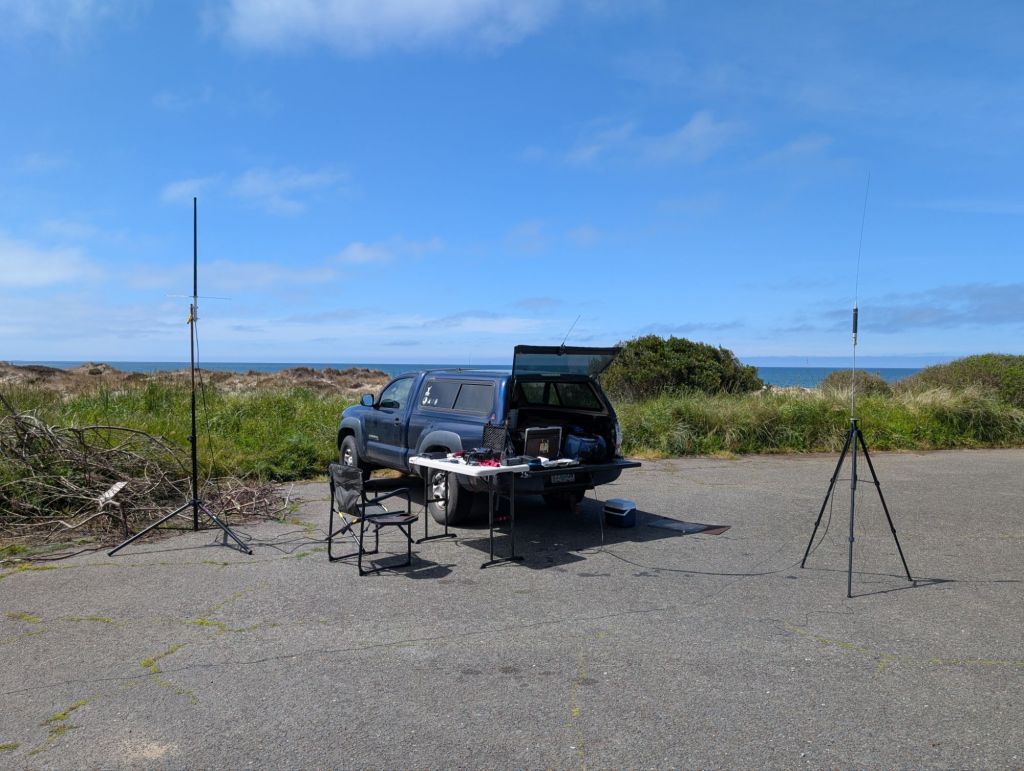
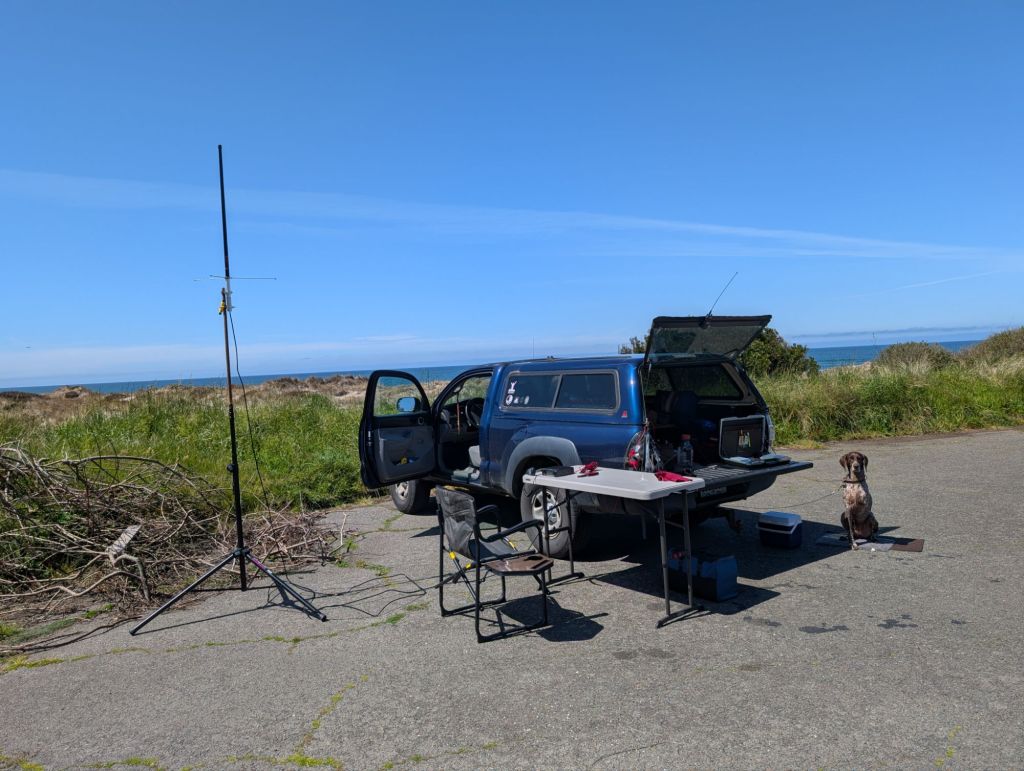
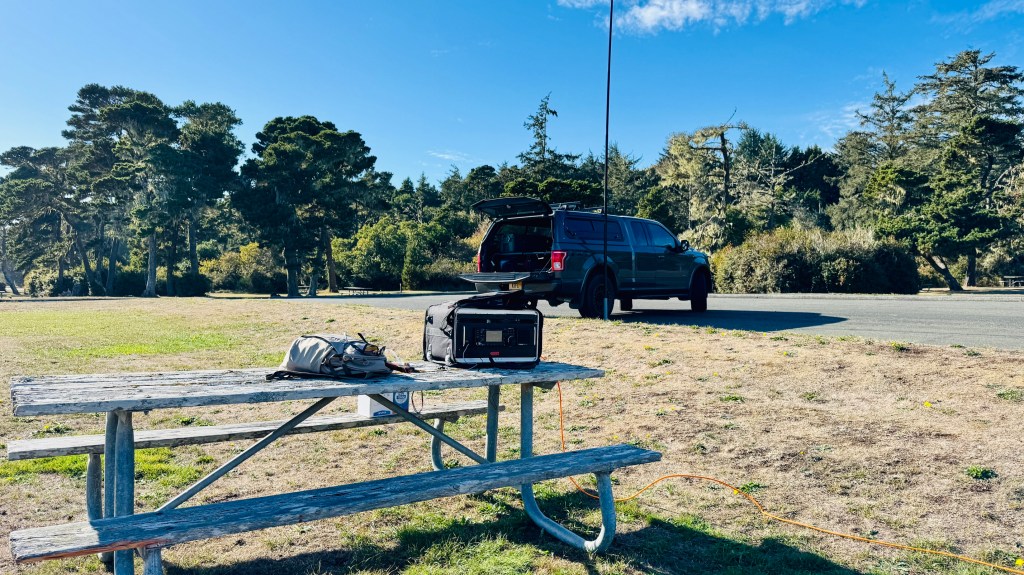
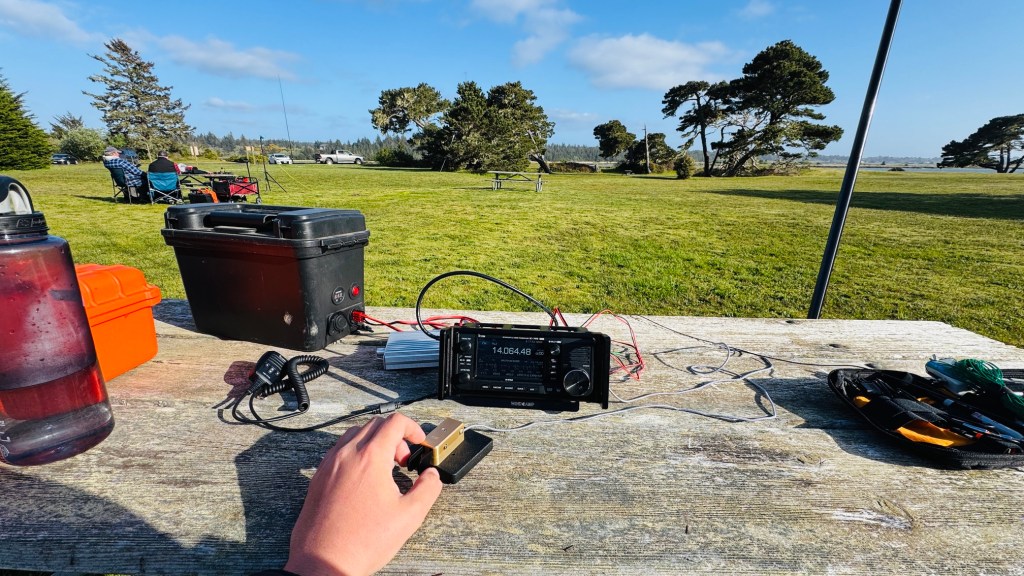
N6BLU: The absolute toughest conditions were had at the beginning of the clubs POTA today. Never has it taken so long to get that first contact….almost two hours. When it was all said and done it did pickup but then slowed again. I gave it about 4 and half hours but managed 48 contacts with 26 park to parks from US 2816(Bullards Beach SP) and US 10007(Oregon Coast Trail). Used my EFHW and my JPC-12 Vertical on 20 and 40 meters.
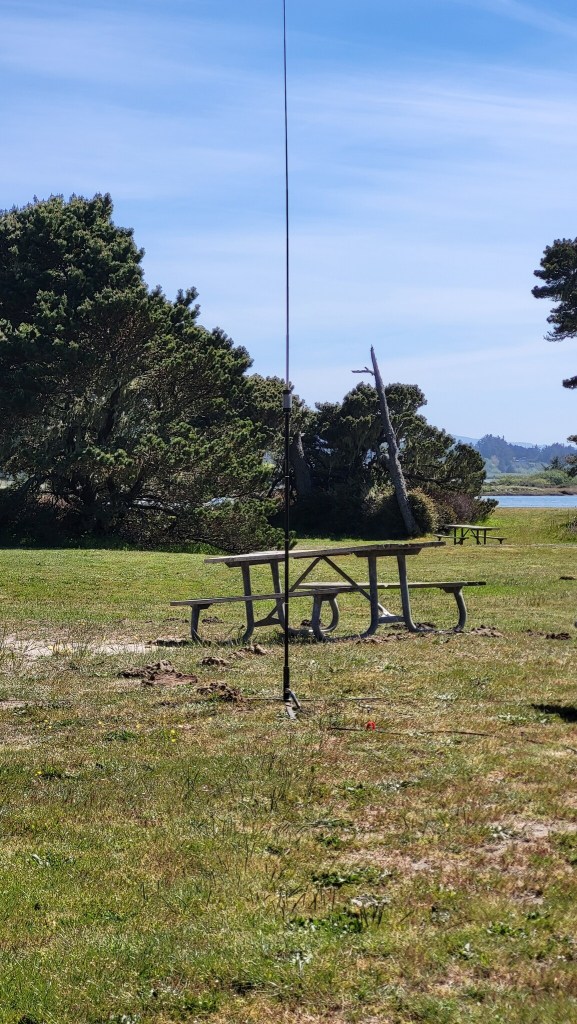
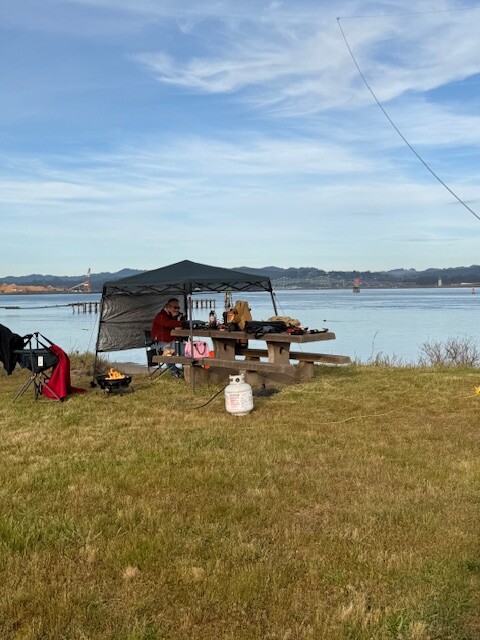
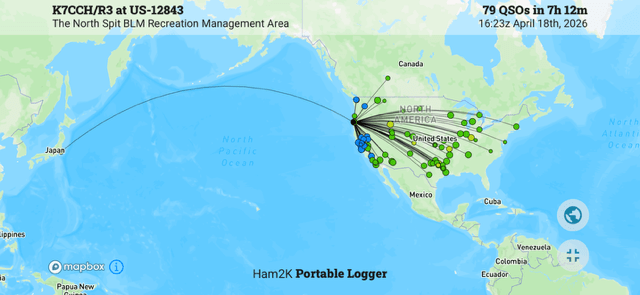
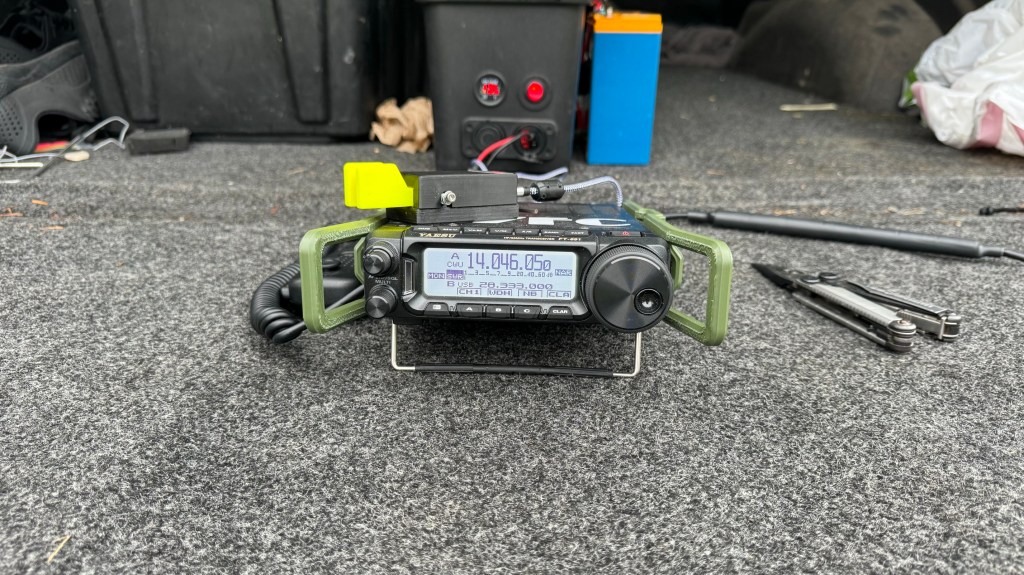
K6GUK: North Spit BLM at the boat ramp area. This area had a little grassy area with two picnic tables. It was breezy. Ended up using the tactical delta loop with FT 710 at 100watts. Getting into the club repeater was a hit and miss. I was cross banding from my HT into my car mobile I had a little bit better luck it sounds like the most started on 17 and then moved to 20 and played a little bit on 40 ended up with a total of 79 contacts, with some going to Delaware and Massachusetts in North Carolina the South was pretty open in Texas, Tennessee, and New Mexico. I probably had 4 or 5 contacts that was under a 51. Zach showed up and got an additional I think 12. I did stay for the new day and use my individual call sign and got an additional 32 contacts on 20 and 40. Had to bust out the fire pit to stay warm, since the wind was kicking up a little bit.
Overall, I think it was a successful day, especially with the first time I’m using that tactical delta loop in the field and I definitely had better luck than most.
K7FC: I started the club activation out at Tugman State Park north of Lakeside in Coos County. I set up an end-fed half wave antenna with a telescopic mast and my Icom 705. Conditions were tough, I spent my time on the 20 meter band and it took about an hour to make 10 contacts. I then packed up and headed south and joined John KK6GUK at the North Spit BLM boat ramp. John had quite the set up with a pop-up tent and a large delta loop antenna that proved to be much better than my end-fed half wave antenna based on the location, surrounded by saltwater, and the gain of the delta loop. We were joined by Al KK7CLH, Tina (don’t know Tina’s callsign), and Vic K7YMM. We were able to hear Gary activating Bullard’s Beach State Park on 20m SSB, but he could not hear us when we tried to call him. I was able to make 10 more QSOs at the BLM site, and John made almost 80 by the end of the day.
Thanks to everyone who made an effort to get on the air as a club for the event.
KK7WXV: Bandon State Natural Area, from the China Beach access I called on 20m for a while but nothing. My ultra portable radio can make only 10W. Could only see a few signals in my waterfall. The solar geomagnetics shut me down completely.
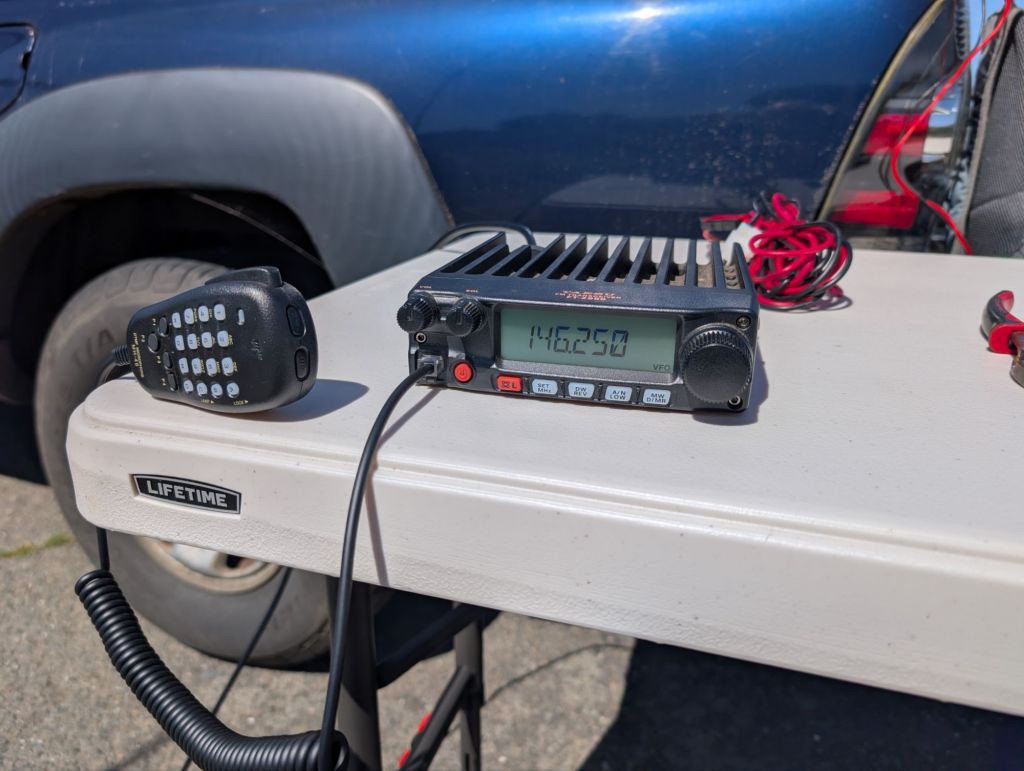
Also tried VHF Simplex 146.520 @ 80W … And made one contact but they didn’t give their call sign.
About 1:30 I could finally hear Gary 100W on 20m (< 10mi away) but very noisy. He reported via telephone that my signal was indiscernible from his noise.
I could hear with them, but my handhelds could not hold the Beaver Hill repeater from China Beach to communicate with the others.
OK we have some clarifications and updates before Saturday April 18th POTA and World Amateur Radio Day.
So far we have 5 operators at 5 locations that will be on the air between Noon and 5PM.
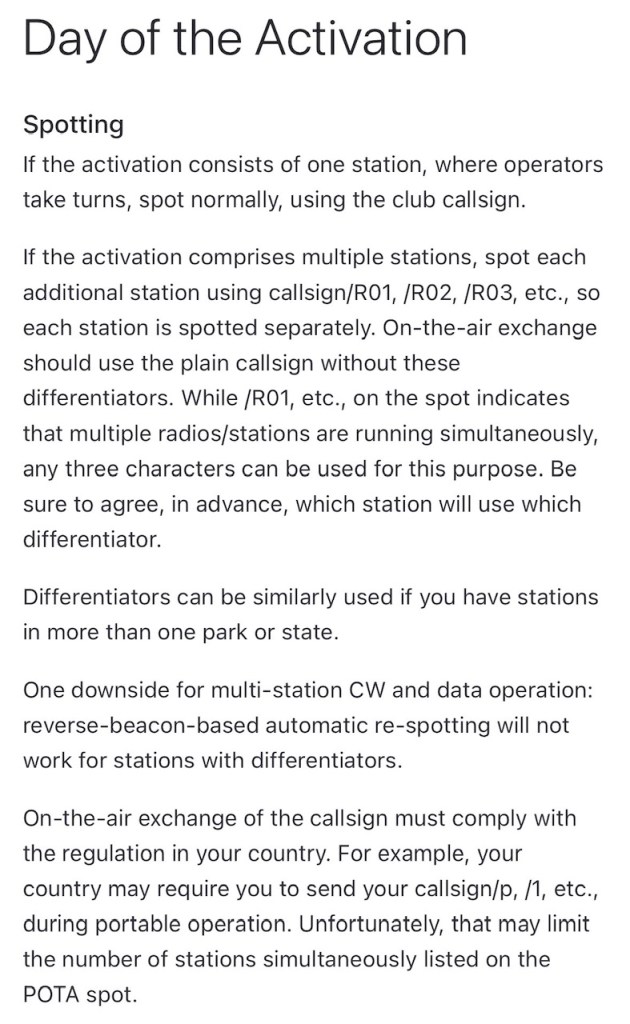
Gary McElroy N6BLU will be at Bullards Beach SP in the vicinity of the Gazebo and will be operating as K7CCH, Zack Larsen K7FC will be at Tugman SP in Lakeside and will be operating as K7CCH/R2. John Edwards KK6GUK will be at the North Spit BLM Boat ramp and will be operating as K7CCH/R3. David Gerhart KK7WXV will be at China Creek Beach access off Beach Loop Dr. operating as K7CCH/R4 in South Bandon. Joe Burkleo WA7JAW will be somewhere in the Elliot State Forest and will operate as K7CCH/R5.
If you wish to activate or join one of our planned stations you will need to be assigned a /R# so we can keep the spotting programs from giving errors. Call me by phone or on the Beaver Hill or Bennett Butte Repeaters, I’ll have a VHF Radio on at my location.
When setting up your logging program please use “K7CCH” for the activation call sign, and use your call for the operator call sign. Ham2k POLO has this feature, unsure about the others.
Only use the “/R#” designation when spotting yourself online, not in the exchange with the other station. Call example “CQ POTA K7CCH Park US-####”
Do not upload to POTA. When Zach uploads your logs to POTA they should automatically show up in your activation so you won’t have to do anything. Export as an ADIF and send them Zach K7FC@duck.com
Thanks and have fun and don’t forget that VHF and UHF Simplex count too!
Issued: 2026 Apr 18 0000 UTC # Prepared by the US Dept. of Commerce, NOAA, Space Weather Prediction Center # # Geophysical Alert Message # Solar-terrestrial indices for 17 April follow. Solar flux 107 and estimated planetary A-index 4. The estimated planetary K-index at 0000 UTC on 18 April was 2.33. No space weather storms were observed for the past 24 hours. Space weather for the next 24 hours is predicted to be moderate. Geomagnetic storms reaching the G2 level are likely.
What: Ham Radio Open House for World Amateur Radio Day 2026
Who: All amateur radio operators worldwide
When: WARD is Saturday, April 18, 2026, at 0000 UTC until Sunday, April 19, 2026 at 0000 UTC but the Ham Radio Open House can be held any time in April, as works best for your local club.
Where: A global event covering all regions of the International Amateur Radio Union (IARU)
Why: World Amateur Radio Day, held on April 18 each year, is celebrated worldwide by radio amateurs and their national associations which are organized as member-societies of the International Amateur Radio Union (IARU). It was on this day in 1925 that the IARU was formed in Paris. American Radio Relay League (ARRL) Co-Founder Hiram Percy Maxim was its first president.
How:
Get Ready for “Ham Radio Open House” for World Amateur Radio Day 2026
It’s the Year of the Club and the second annual ARRL Ham Radio Open House event in April offers a chance to show off your club’s hi-tech gear and skills to your community! ARRL is encouraging radio clubs and schools to help promote amateur radio science and technology by opening their stations to the public with an open house during the month of April. In addition, groups are encouraged to set up in public places or conduct outdoor activities, such as a Parks on the Air (POTA) activation or satellite contact. The event is built around World Amateur Radio Day on Saturday, April 18, but your open house may be scheduled at any point in the month.
Ham Radio Open House is intended to highlight the Amateur Radio Service for its development and practice of the latest radio communications and technology, and as a hands-on pathway into science, technology, engineering, and mathematics (STEM) fields for the next generation. This is a chance to not only shape the conversation about modern ham radio but also to show how it serves as a steppingstone and testbed for many young people pursing STEM education and future high-tech careers. As ARRL CEO David Minster, NA2AA, writes in his March QST editorial, “the notion of hams sitting in Grandpa’s basement listening to tube radios is quickly dispelled when visitors see a modern transceiver and computer being used to work the world!”
Here are just a few ways to participate in, and promote, World Amateur Radio Day:
Get a station on the air! Create your own personal “event” to talk about amateur radio to others, including family and friends.
Find out more about World Amateur Radio Day by checking the IARU website and other Resources listed below.
Create and hold a special net or on-air event on World Amateur Radio Day to raise the level of attention for the celebration, and to encourage other hams to talk about our hobby. Consider creating and offering a commemorative certificate for contacting your special activation. It can be an electronic one as these are cost effective.
Get the word out! If you are an ARRL Public Information Coordinator, Public Information Officer, or responsible for radio club publicity, send a press release and conduct some public relations outreach to highlight the day and/or events. Talk about all of the activities radio amateurs have continued to support during the pandemic, and how amateur radio serves our communities. Find recent examples of amateur radio in-the-news at www.arrl.org/media-hits.
Promote your personal World Amateur Radio Day activity(ies) on social media platforms like Twitter and Facebook by using the hashtag #WorldAmateurRadioDay. Make sure you send it to various clubs, reflectors, and media.
Join us in celebrating World Amateur Radio Day and all the ways amateur radio brings us together!
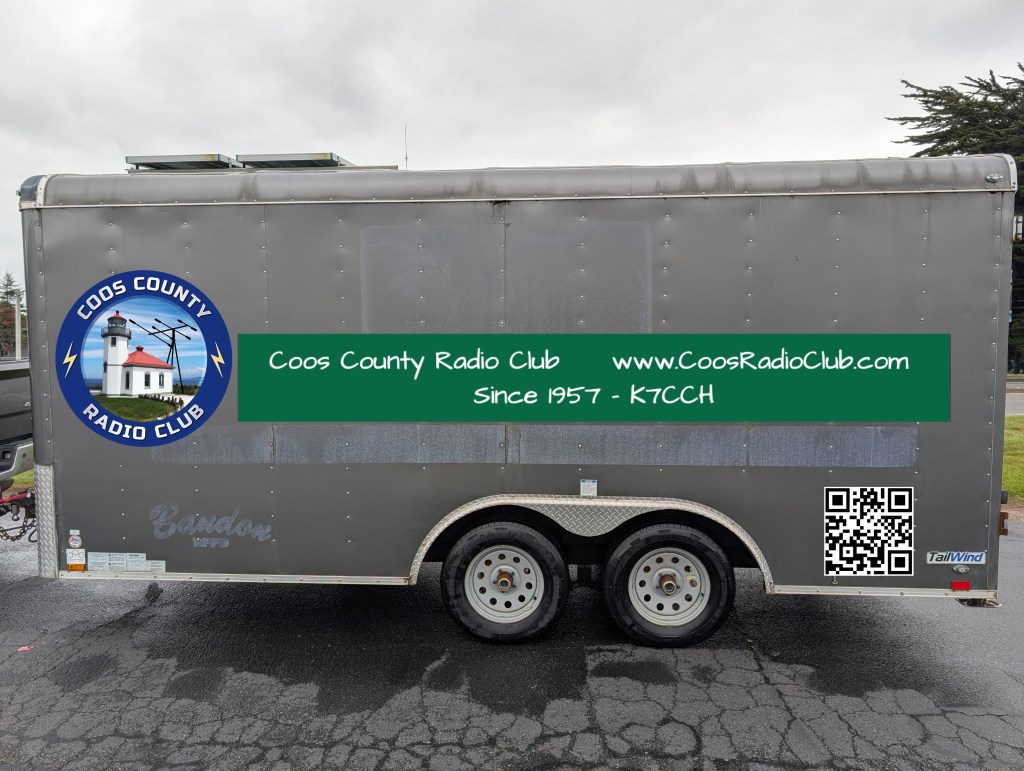
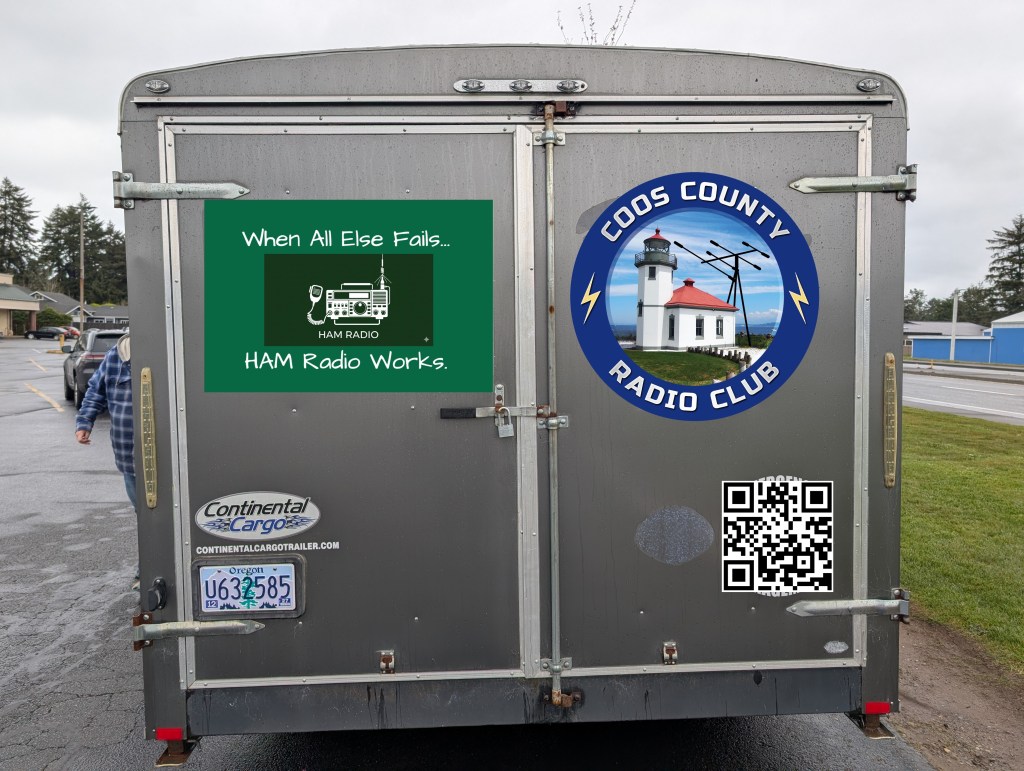
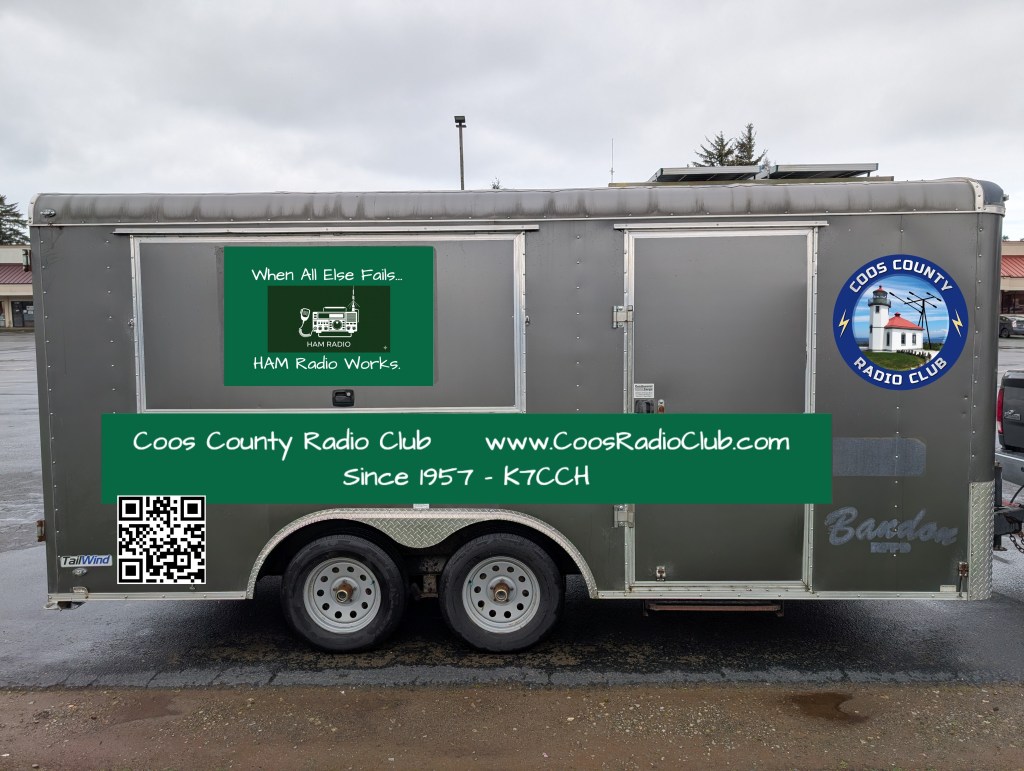
These mock-up pictures represent a first pass (SWAG) at Trailer Graphics.
We knew graphics would cost a bit. (..)
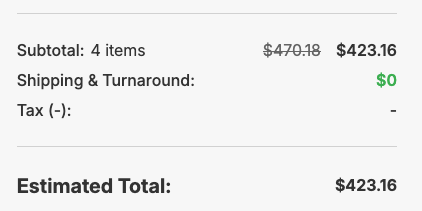
We guessed $500 for a budget and were pleasantly surprised to reach a number that’s a little lower. Which leaves a few bucks for a graphic for the man-door with “club rules”, or warnings, some such. (I think having some rules is a good idea.)
There’s a link to an opinion survey at the end of this post. Please take a moment to fill it out. 5 dreary questions. I know it’s a big ask.
2 ea Motto (1 Side and back)
2 ea Banner (sides)
3 ea QR codes (sides and back)
4 ea Logos
Survey
Or use this Survey Link “Trailer Graphics Questions!” (Survey Closed 6/8)
A new Indiana law changes the game by treating amateur radio equipment with the same level of respect already afforded to satellite dishes and flagpoles. It acknowledges that a licensed operator is not just a hobbyist, but a federally regulated asset who needs an external “ear” to the world to be effective.
The plan is to “Activate” as many Parks in Coos County in one afternoon as possible.
We will be making QSO’s using the club callsign. K7CCH.
What’s an “Activation?”
A licensed amateur radio operator sets up a portable station within a designated, qualifying park (state, national, or provincial) to make radio contacts with other operators. A successful activation requires making a minimum of 10 QSOs (contacts) in a single UTC day, which are then logged and uploaded to the POTA system for awards.
Spotting Rules Excerpt
The club can do multiple activations at once by using /R01, /R02, /R03, etc. for example
K7CCH/R01 at Bullards Beach State Park,
K7CCH/R02 at the North Spit BLM Area,
K7CCH/R03 at Tugman State Park.
If you want to learn how to make a POTA activation, join one of the locations with experienced Hams. Or! If you are able to do an activation on your own, activate a unique park.
Hope to see your activation on the spots page!
More information will be made available in coming days.