The countdown for NASA’s Artemis II test flight is underway at the agency’s Kennedy Space Center in Florida.
The targeted launch time is 6:24 p.m. ET on Wednesday, April 1.
Artemis II is the first crewed launch of NASA’s SLS (Space Launch System.)
The countdown for NASA’s Artemis II test flight is underway at the agency’s Kennedy Space Center in Florida.
The targeted launch time is 6:24 p.m. ET on Wednesday, April 1.
Artemis II is the first crewed launch of NASA’s SLS (Space Launch System.)
This was forwarded to the group by Armando Martinez for some upcoming Amateur Radio related trainings that are available through Zoom or in person.
A chance for FREE TRAINING for our hobby is about to happen covering a wide variety of topics via Zoom, If you read through the class syllabus below and attached, they will run from April 2nd through June 18th. Feel free to take any, just a few, one or all of them on what ever interests you..
Chuck KF6TWK and Jay KI7UPY are planning watch parties, at different locations such as the Fire Department, the library or possibly other places where we can get together as a group have fun and network during all of these..
The email from Roland Anders is requesting you register with him to receive Zoom information, just drop him an email and tell him you would like to register. roland.anders
Chuck would like to know how many of our club members will be viewing or attending the training, just so we can make arrangements for everyone, Once you sign up with Roland drop Chuck an email at learning
Even if you sign up, you do not have to attend all.
FREE ON-LINE AMATEUR RADIO OPERATING CLASS
A free, weekly, 3-hour Amateur Radio Operating Class on Zoom will begin on Thursday April 2 and run through June 18. Sessions will be 2 to 3 hours long beginning at 6:30 PM. EASTERN time. Typically, two topics are covered per evening. The presenters will be folks very experienced in the various subjects.
A detailed syllabus will be published before the classes begin. Attend them all, or any that you like, but you must register for the classes. To receive registration information, contact Rol Anders, K3RA, at roland.anders.
Subjects will include:
All About Operating–A general Introduction
Amateur Radio Organizations—Local to International
Ham Radio Operating Awards
DXing-History and Tips from the Experts
QSLing-How to get that needed confirmation for DXCC or WAS
VHF/UHF Weak Signal Work and “Roving”
Image Operating—Slow Scan and Fast Scan TV
Remote Station control over internet
Learning CW in the no-code era
Digital Modes—From RTTY to FT8 and beyond
Contesting—How to get started, tips for the beginner and intermediated contester
Logging Software—What’s available, how to use
Propagation—A general intro to HF Propagation with emphasis on the declining phase of the current solar cycle
Amateur Satellites—How to get started
Portable (backpacking) operation and POTA—Tips from an expert
Setting Up a Modern (or not so modern) HF Station
Lightning Protection and Grounding
Traffic Handling
Public Service, Emergency Communications
John
KC7BWK/WRUE600
SVFR Station 1 2625 US-101 Park across 26th Street (south) in the dirt parking lot. Do not park east or west of the building unless you have a handicap symbol.
Coast Village Clubhouse 131 Rhody Loop on the east side of Spruce Street. You will need a gate code to enter–please get in touch with Jay, KI7UPY, 541-991-9478 (text/call) for the gate code–this can be done before you get to the gate. Park in the large parking lot south of the office/clubhouse/laundrymat/post office.
Siuslaw Public Library-Bromley Room 1460 9th Street. The Bromley Room is just past the water fountains on the right side as you enter the building’s front doors.
Someone will be there at 3:00pm to open the doors and get things set up. All are welcome–a ham radio license is not required. The program will begin at 3:30pm and can go three hours or until they kick us out of the venue. Please invite anyone that you feel would be interested.
Apr 2 SVFR #1 Upstairs
Apr 9 Coast Village clubhouse
April16 SVFR #1 Upstairs
April 23 Siuslaw Public Library
April 30 SVFR #1 Upstairs
May 7 SVFR#1 Upstairs
May 14 No Session—Dayton Hamvention Week
May 21 SVFR #1 Upstairs
May 28 SVFR #1 Upstairs
June 4 SVFR #1 Upstairs
June 11 SVFR #1 Upstairs
June 18 SVFR #1 Upstairs
Operating Class Syllabus
Spring 2026
Optional Supplemental Reading:
The ARRL Operating Manual for Radio Amateurs, 12th Edition. The material in the Operating Manual supports many of these talks, but it is not a specific text for them. Some of our topics are not in the manual, and a few of the manual topics are unique to the book. The book is available at Amazon.com in both Kindle and print versions.
Course Organizers: Rol Anders, K3RA roland.anders@comcast.net 410-796-4792 Tom Christovich, K3YH tom.christovich@gmail.com 410-615-3269
Date . Title Speaker
Apr 2 All About Operating, Amateur Radio Rol Anders, K3RA
Organizations, Ham Radio Awards
Apr 9 VHF/UHF Weak Signal Work and “Roving” Brian Skutt, N3IQ
Fast Scan TV Operating Jim Andrews, KH6HTV
April 16 DXing Bernie McClenny W3UR
Rol Anders, K3RA
QSLing Rol Anders, K3RA
April 23 Remote Station control over internet Ike Lawton, W3IKE (30-40 min)
CW in the no-code era Rol Anders, K3RA
Apr 30 Digital Modes Alan Zimmerman, KM4ND
May 7 Contesting Dan Zeitlin, K2YWE
Logging Software Rol Anders, K3RA
May 14 No Session—Dayton Hamvention Week
May 21 Amateur Satellites Paul Stoetzer, N8HM
Portable Operation and Parks On The Air Paul Stoetzer, N8HM
(POTA)
May 28 The Increasing Dynamics of HF Propagation Frank Donovan, W3LPL
During the Declining Phase of Solar Cycle 25
June 4 Public Service, EmComms Andy Protigal, N3AWP
Dan Wilt, N3YQ
June 11 Setting Up a Modern (-or not so modern) Alan Zimmerman, KM4ND
HF Station Kevin Zembower, KC3KZ
June 18 Lightning Protection and Grounding Ron Block, NR2B
Traffic Handling Al Nollmeyer, W3YVQ
Robin Schaefer, AA3SB
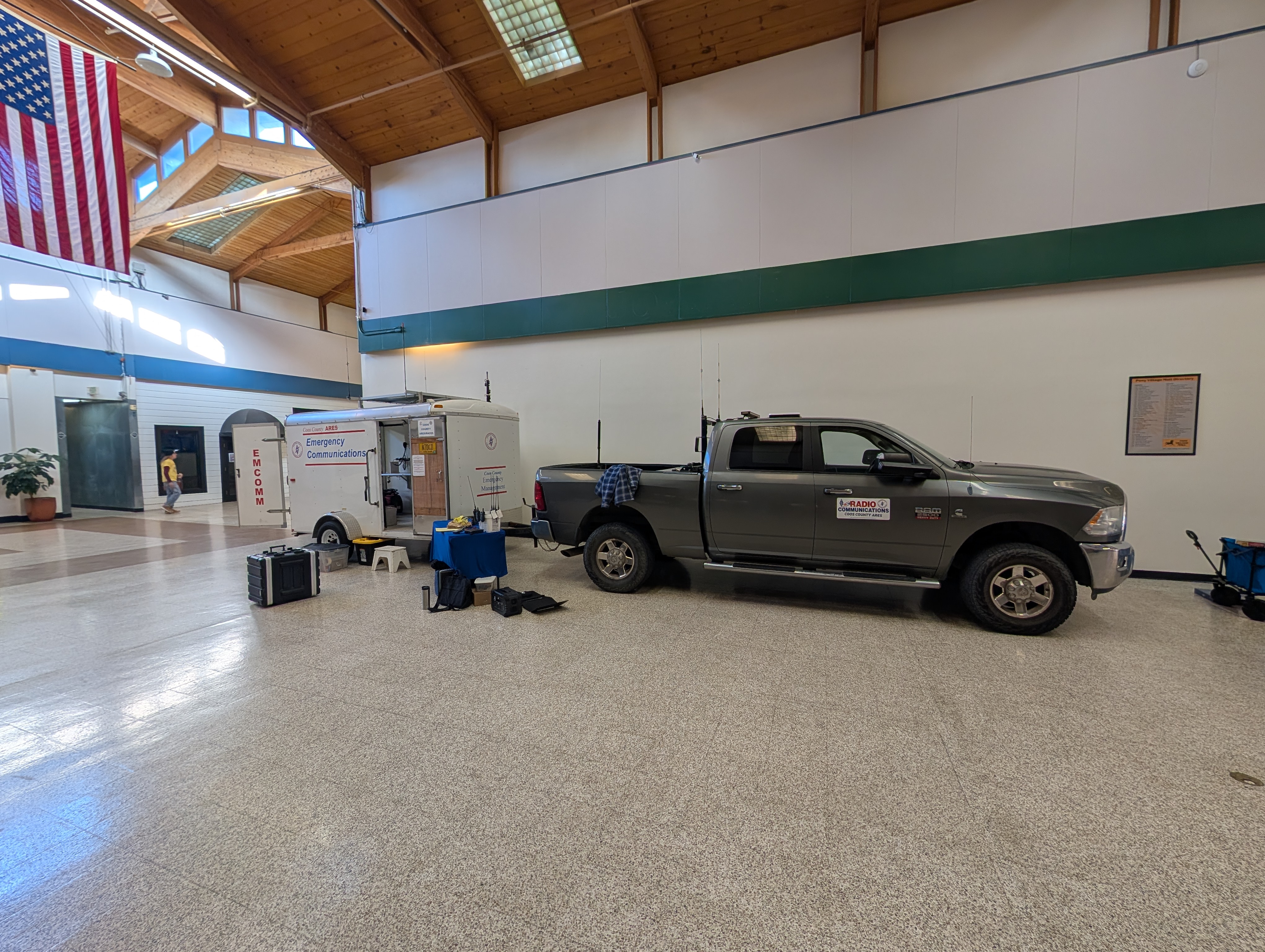
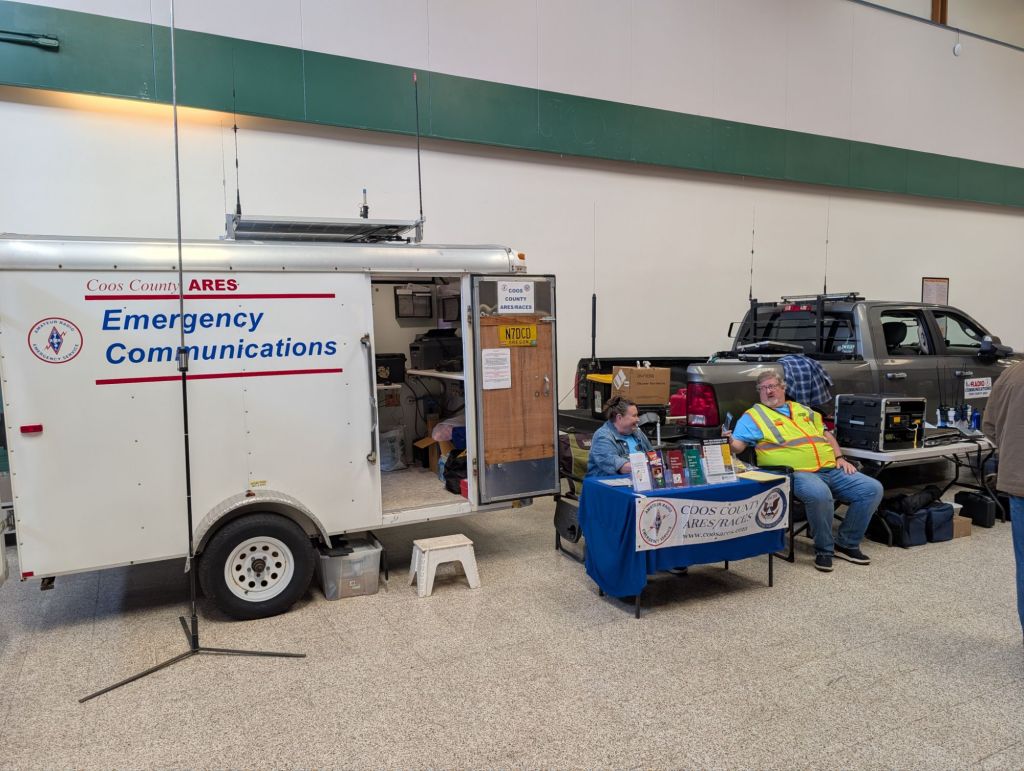
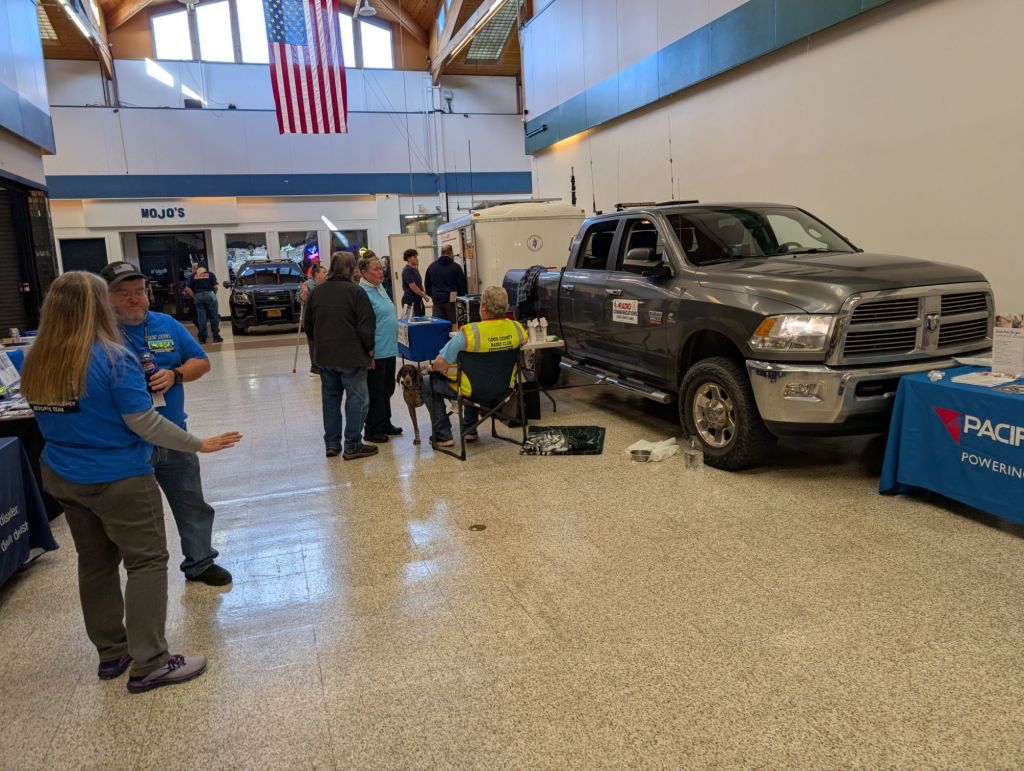
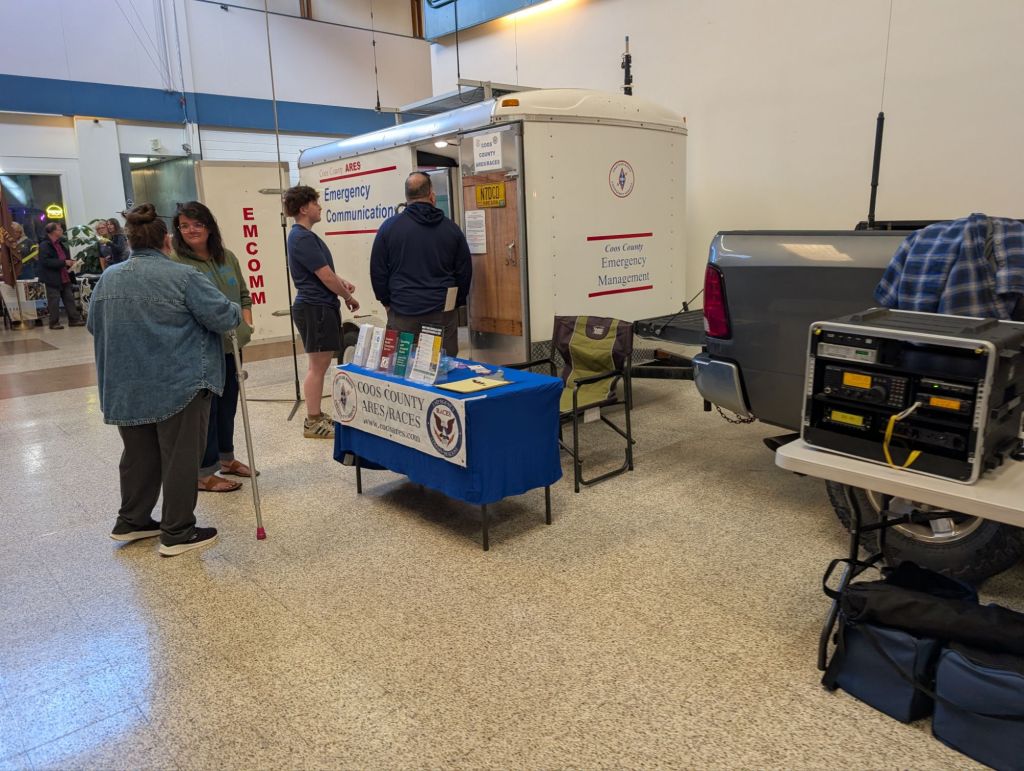
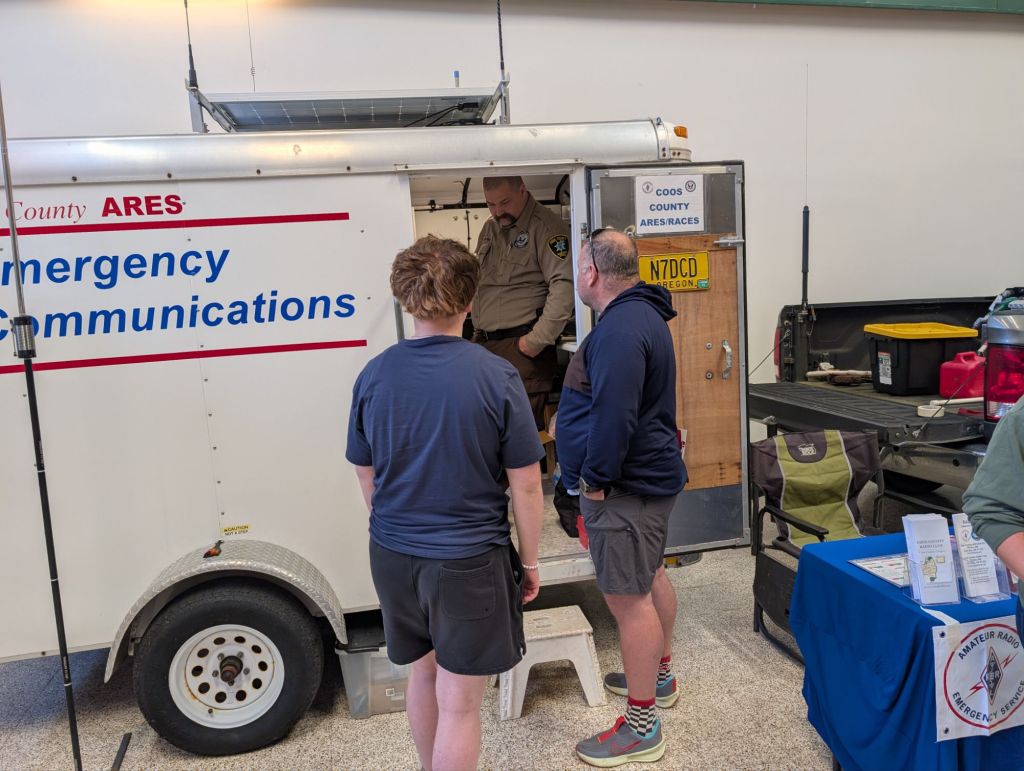
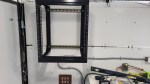
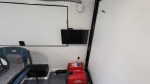
Coos County owes a debt of gratitude to Gary N6BLU. Gary supplied the space, tools and lions’ share of labor – even materials – to get the ARES/RACES EmComm Trailer redone.
Plans are being made to position the trailer in North Bend.
Join Skywarn Youth ham radio operators for the second year in a row as we operate Special Event Station: N0A (November Zero Alpha), March 15th through March 29th, in an effort to encourage hams throughout the U.S. and around the world to learn about Severe Weather Awareness.
The story behind 11.175 MHz
One of the most widely monitored military radio channels…
Typically called “Number stations” clandestine use of High Frequency Radio remains a reliable means of sending messages. Stations commonly transmit on a set or predictable, rotating schedule.
In the absence of internet for communications, HF can be a long-distance fall-back for state and non-state actors.

Priyom.org – Is an international organization documenting intelligence, military and diplomatic use of shortwave radio. They recently published the details of a new source first heard on February 28th: A Persian-language (Iranian) numbers station, designated V32.

V32 broadcasts daily on 7910 kHz at 02:00 and 18:00 UTC, featuring live or prerecorded voice messages and dual-tone, 620 Hz / 925 Hz background beeps.
Key Details About V32 (Iranian Station):
Station Designation: V32.
Language: Persian (Farsi).
Frequency: 7910 kHz (Upper Sideband).
Schedule: Daily at 02:00 and 18:00 UTC.
Characteristics: Uses the word tavajjoh (attention) to separate number groups.
Origin: While associated with Iran due to the language, some reports suggest signals may originate outside Iran, potentially near the Red Sea, based on direction-finding.
Purpose: Believed to be used for transmitting encrypted, one-time pad messages to intelligence agents or military personnel.
Numbers stations are shortwave radio broadcasts used for covert, secure, analog communication that is immune to cyberattacks.

Target Launch Date: April 1, 2026.

Launch Window: If the April 1st date slips, there are several “launch opportunities” in early April (specifically April 1, 3, 4, 5, and 6) based on the alignment of the Earth and Moon.
https://en.wikipedia.org/wiki/Artemis_II
Mission Duration: Approximately 10 days, ending with a splashdown in the Pacific Ocean.
For the upcoming Artemis II mission (targeted for 2026), the short answer is: Yes, but it will be much harder than in the Apollo era.
While you won’t be able to “tune in” with a standard handheld radio to hear the astronauts chatting, dedicated amateur radio operators with specialized equipment are actively preparing to track and receive signals from the Orion spacecraft.
The primary communication for Artemis II happens on the S-band (2.2–2.3 GHz) and via a new high-speed Optical (laser) Communications System (O2O).
Interestingly, NASA has officially invited the amateur radio community to help track the mission. They are seeking volunteers for Passive Doppler Tracking.

| Feature | Apollo Missions (1960s/70s) | Artemis II (2026) |
| Primary Link | Unified S-Band (Analog/Digital) | S-Band & Infrared Laser (O2O) |
| Data Rate | ~51.2 kbps | Up to 260 Mbps |
| Accessibility | Unencrypted; “Eavesdropping” possible | Highly Encrypted; Proprietary Digital Modes |
| Ham Role | Independent monitoring | Official NASA collaboration (Doppler studies) |
If you have a 2.4 GHz dish and an SDR, you can try to “see” the signal spike on a waterfall display as Orion travels to the Moon. If you just want to hear the crew, your best bet is to listen to the NASA TV live stream or find a local ham repeater that is rebroadcasting the audio feed.
“Promising implications for everyday uses in consumer electronics.” Sam Jarman, Phys.org
Rydberg-atom sensors become antennas to detect the radio signals, performing demodulation and down conversion automatically.

Rydberg receivers could eliminate significant portions of the front-end devices and electronics concerned with signal isolation when compared to conventional receivers.
In a Rydberg atom, a single electron is excited to an extremely high energy level, pushing it far from its host atom’s nucleus. This makes it very sensitive to electric fields.
“We demonstrated simultaneous reception of neighboring channels with strong isolation between them.”
Researchers monitored numerous radio channels at once, or tuned to them individually.
Ryderberg atoms respond over a very wide instantaneous bandwidth.
https://phys.org/news/2026-02-rydberg-atoms-handheld-radio.html
https://phys.org/news/2025-10-quantum-radio-antenna-rydberg-states.html
Editor’s comment:
When they build a quantum transmitter, things will get really interesting. Imagine a radio with no wire antenna. Towers might still be useful though… to elevate the sensor / emitter? Who knows?
Not holding my breath on this one…
– Ed.
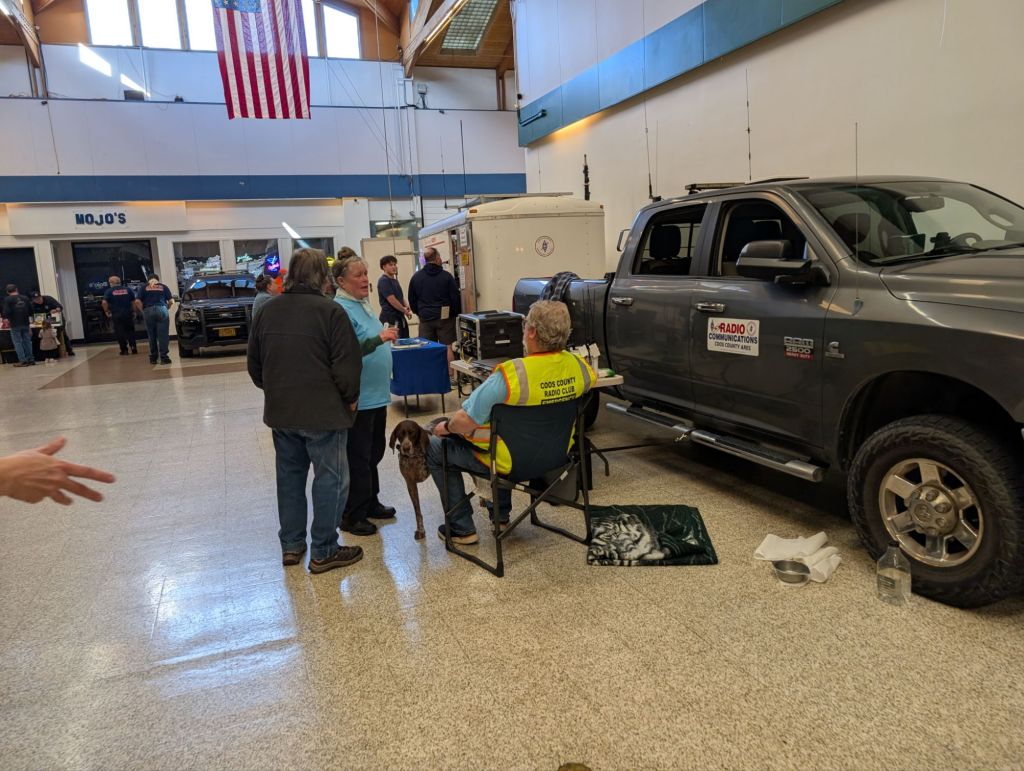
A meeting was held this morning to discuss options for remodeling the Coos County Radio Club trailer.
Various ideas were considered, including whether the club should pursue various grant sources to finance some of the work.
Ultimately, the group agreed that developing a portable shack for club use would benefit members in a range of ways.
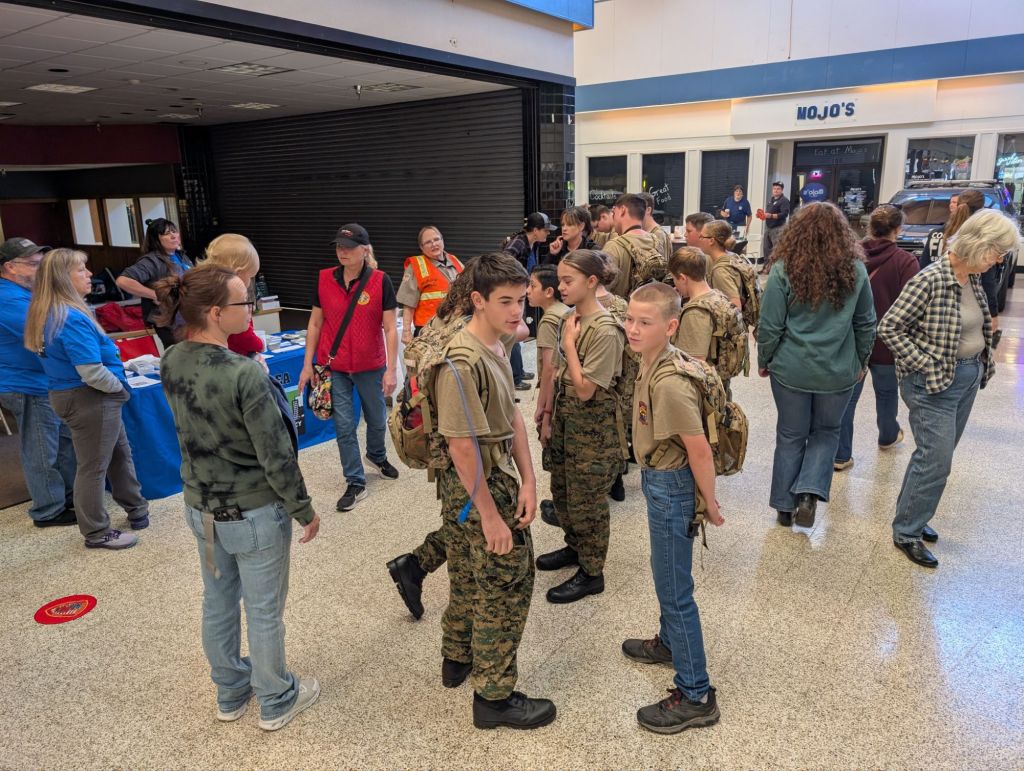
The consensus was that CCRC needs to increase Amateur Radio public awareness by attending various events around the county.
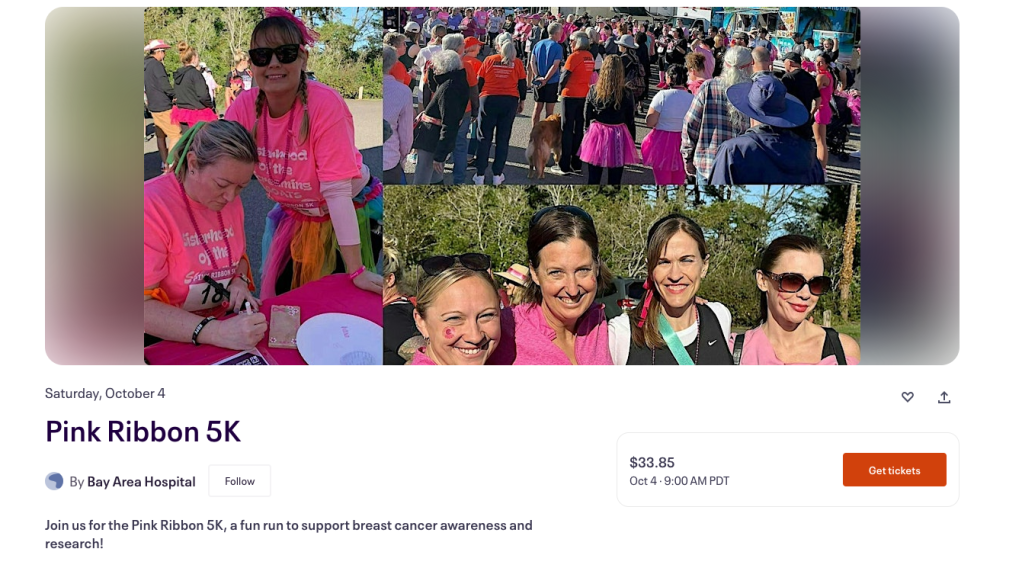
Public events might include Independence Day Celebrations, the County Fair and Cranberry Fest. The trailer will also serve as a base for supporting concerns that operate the Tour de Fronds, Prefontaine, Circle the Bay and Pink Ribbon runs.
Of course having a fully ready club trailer will make hosting Field Day’s much easier.
Getting the trailer ready to show with new graphics and the gear we already own is an opportunity to make Amateur Radio more accessible to our communities and grow membership.


More information will be coming soon.
Work parties will be arranged on weekends, starting with removing unwanted structure and installing insulation.
Members that assist will learn about power, grounding, antennas and radios.
Soon members will discuss the layout and floor plans to host features.
Looking forward, there will be another report at the club meeting next month.
The overall vision is to plan well, start simple and spend wisely. CCRC can continue to work on building out a great club trailer as time passes, adding features in the future as interests and funding permit.
Those in attendance were N6BLU, KF7RSF, W7JAW, KK7WXV, AK6JG and K7YMM
Please let the Editor know if I missed anything? Or anyone.
Feedback welcome. Comment below!
On Jan 11, 2026, Gary (N6BLU) and John (KK6GUK) set out to achieve a rare Parks On The Air goal by attempting a 30-park rove. The Lion award is granted to anyone who activates 30 parks during one UTC Day. Activators only get the tier award for the number or parks activated during a UTC Day, so no 5-10-15-20 & 25 activation awards are given if you activate 30 parks. Oh Darn, we must go have more fun activating multiple parks in one UTC Day to get the other awards.
Back in late summer 2025, I threw it out there to Gary (N6BLU) about a rove, and surprisingly he liked the idea. Planning the rove involved a lot of brainstorming, multiple discussions, a lot of mapping, more discussions, more mapping, looking at equipment, mini park roves and activation’s, and just getting out and activating using different radios and antenna set-ups.
We are somewhat lucky here on the Southern Oregon Coast in that we have quite a few parks to choose from, and as such, they are fairly close in distance and not far off a major highway. We knew we had good radios, various antenna set-ups, and knowledge of the area. What we didn’t know was how difficult each individual park would be to activate. The timing to get in and out quickly, the changing band conditions, road conditions, weather, and park hours to name a few.
The Radios were easy since we each have and are familiar with the Yaesu FT-891. Gary N6BLU has one permanently mounted in his truck that he uses all the time. I also have one in my car that is easily taken in and out as I use it in multiple places. I have a Yaesu FT-710 and because of its relatively small size it was our 1st choice primarily for the filtering and waterfall display. Not critical by any means but nice to see where the signals were on the display. Both radios were hooked up in N6BLU’s truck, and an Alpha Delta Switch was used to go between them as needed.
A minor problem presented itself during a previous mini rove to activate some parks was the weight of the radio sitting on the Harbor Freight protective case. A lap computer table was quickly purchased to rest the radio on my lap while driving between parks. This was still a lot of weight on the lap, but more effective and easier to operate the radio for the passenger.
As far as antenna’s went, you wouldn’t know if you followed us on the rove, but this was a very lengthy discussion. We brought a plethora of antennae with us. The Yaesu ATAS-120A mounted on the back of Gary N6BLU’s truck, 2-EFHW which was a 49:1 & 9:1 (The 9:1 was to give us the 80/75 Meter option) the 49:1 was a chalk line antenna, with the intent to break down faster if needed. We also had the Chameleon 25 ft whip, with a 5;1 balun (for multi-band use if needed) with a small tri-pod. Even deeper in the bag If needed, we also had a JPC-12 vertical and a Buddi-Pole Deluxe. Back-up upon back-up. The ATAS-120A was the rock star. But we did deploy the Chameleon at Sunset Bay State Park (US-2856), which was a two-fer with Ocean Shore State Recreation Area (US-9568) that required us to set up and activate between the vegetation line and the shoreline. This was really our only shot at activating the Ocean Shore Rec. Area. I had done an activation in California with the Chameleon setup, so that trial was done.
We went out a few months before the rove and activated each park on the list with the ATAS-120A. We use the pota.app, Google maps, potamap.us and ONX maps to research and know each parks boundaries. We knew where to park, what the terrain was and how effective the ATAS-120A vertical would be, even in areas with steep terrain.
So, we had radios, antennas, where to activate from for each park, and had a knowledge of the area. Next, we worked out a rough order of the parks we were going to attempt, however that list was still fluid right up until the day of rove. The last couple of items out of our control were the weather; We paid attention 10 days out and it was looking great! Traffic: Slow drivers and accidents, being that this was on a winter weekend, we felt confident that heavy traffic or road work would not be an issue on Highway 101. Band conditions; The Sun threw us an attitude the night before. We talked for about one minute about postponing, but we coped our own attitudes and went for it. If you think about it, if you do not get on the air and try, you won’t make any contact’s. We figured we would know within a couple hours if propagation was going to stop us.
You don’t realize just how much help you need during a multiple park rove, and luckily, we had it. We obtained many followers, Hams that are called hunters that watched the pota.app web page and kept track of us while we moved from park to park, spotting us, holding the frequency for us, and even telling other hams about our rove. One ham in Arizona and another in Canada followed us and helped us retain a frequency between some of the parks so hunters could catch us again in the new park. Some of the Hams that followed us made it possible to get our contacts fast. K7SEN, KI5MM, K6QAZ, AK6U, K8NEE, KD5EDL, K7YMM, KD7WD, KI7PON, K7YMM, ZACK K7FC who helped us set up and breakdown on the beach, and many more whom I am sure I forgot, but am very thankful for.
Luckily, we didn’t really run into any problems. We did outsmart ourselves the next morning by waiting for the gray line on 20 meters to reach us. That first park took us 2 hours to activate and kind of put us up against the clock. If we had just put up the Spider-beam Mast, gone to the 9:1 EFHW we could have got on 75m and made some contacts. Another mistake was that we stopped at Wendy’s to grab some dinner around 0400 UTC on Saturday night. This killed our momentum, and we lost most of our followers. This caused us to only get 4 contacts at our next scheduled park, the Coquille Valley Fish and Wildlife Area (US-12945), before the bands went silent and made us have to go back the next morning to finish it up. Again, we could have and should have setup for 75 meters. The good luck with it all was that by us going out there, you would not even have known the band report was bad. 99% of our parks were activated in under 20 minutes. Once again, the followers, and by using 2 meters, 220, and 440 simplex, to get some of our locals when the HF bands were not cooperating helped us fill in the gaps.
In the end we ended up activating 31 parks with 398 total contacts. Even though this is “Just ham radio,” this was a sense of accomplishment. Our drive home was quiet, we barely spoke while munching on chips and dip. We were not too proud to admit that we were tired! In the days leading up, I had reached out and developed a rapport with some hams that are part of the POTA help desk and POTA operators themselves. After Gary (N6BLU) and I talked at his house afterwards, He had mention that he believed this was an award that was probably not obtained by many. I had asked the help desk if they had numbers and found that indeed they did. We became the 97th and 98th POTA activators to get the Lion award worldwide. Activating 25 parks only had 70 hams worldwide. Challenge accepted, in due time and maybe planning different parks, You game Gary?!!!!
Thanks to all from KK6GUK & N6BLU 73′ Hope to get you down the log soon.
For more information Contact Gary & John through the Coos Radio Club.