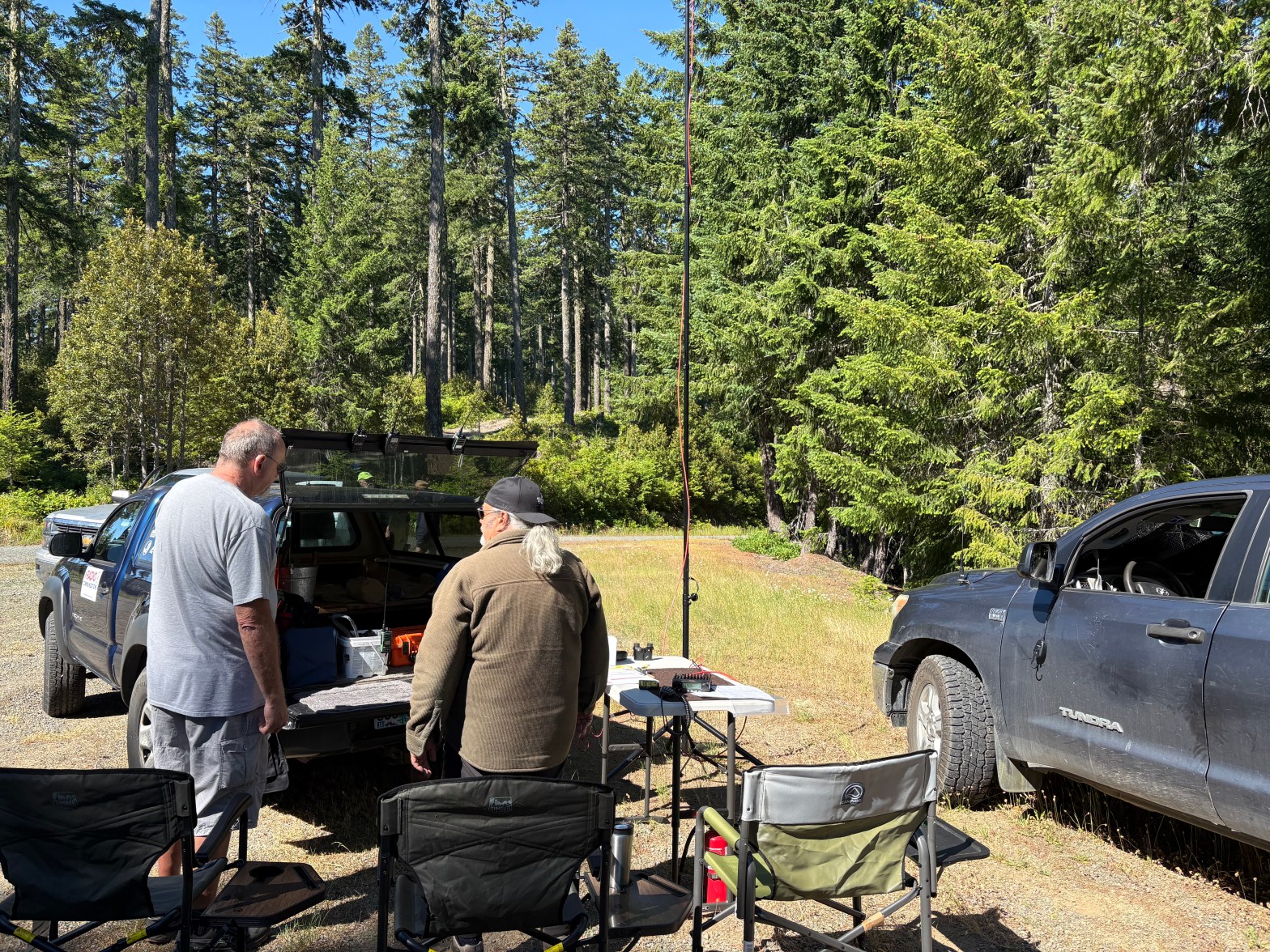
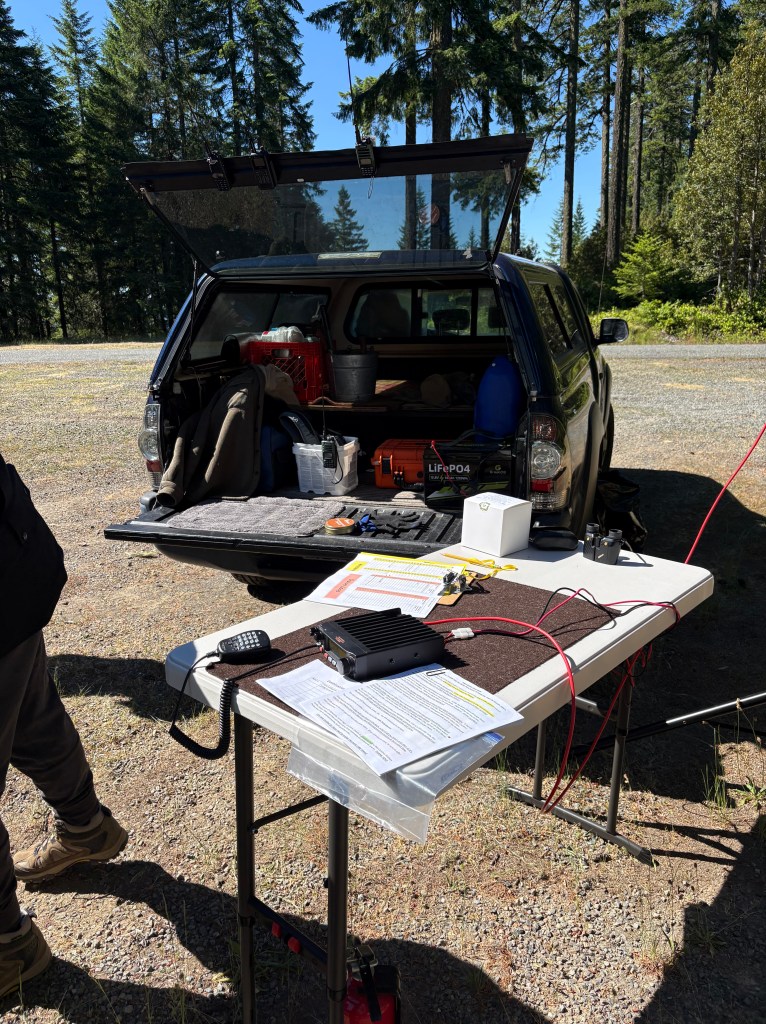
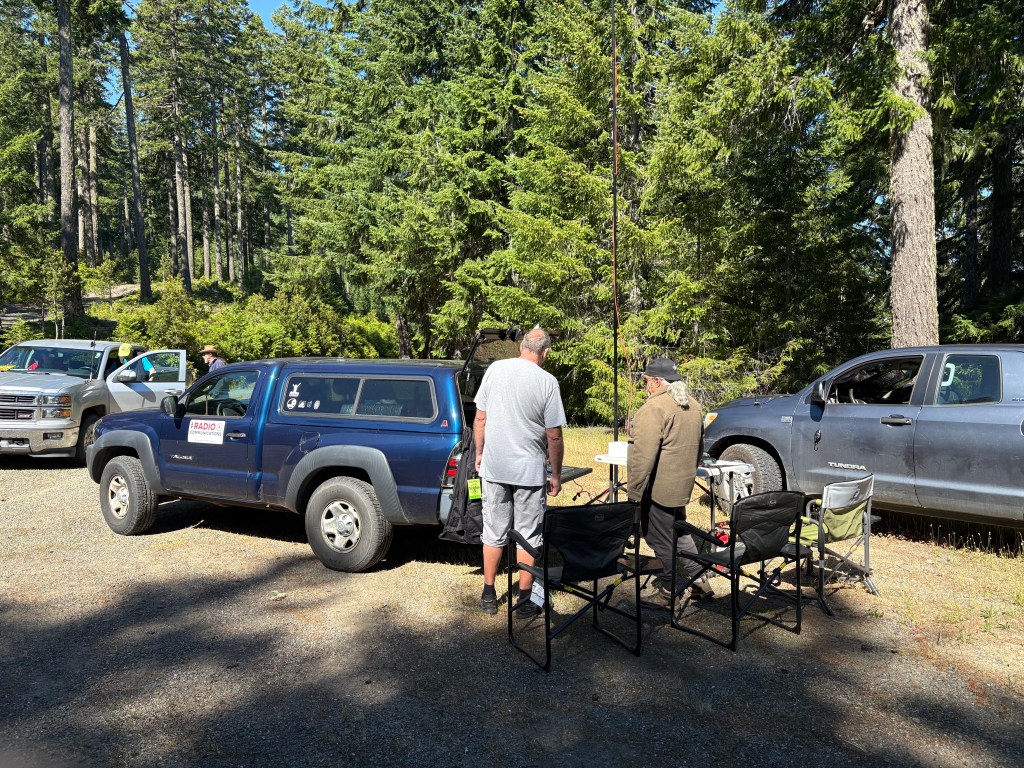
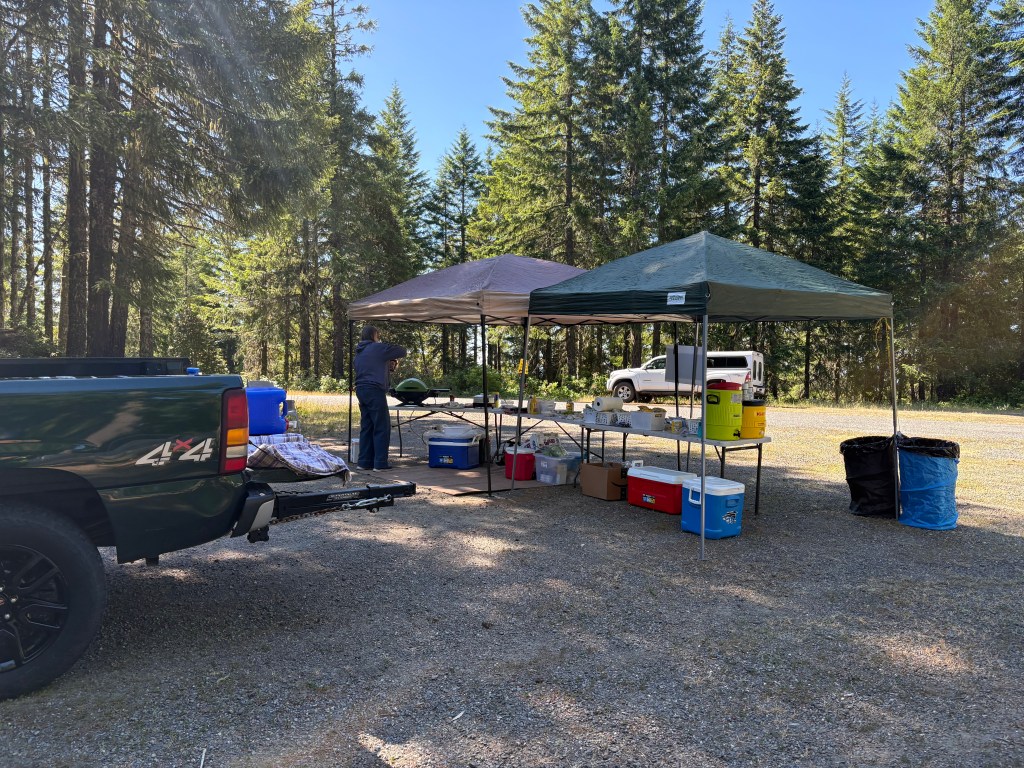
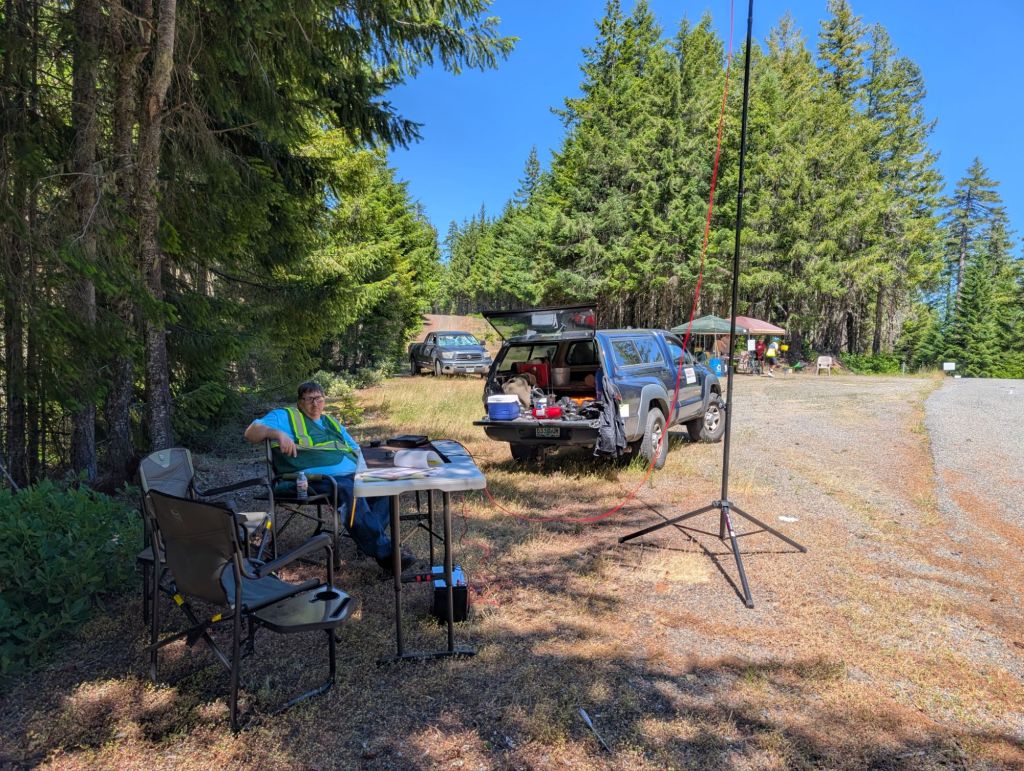
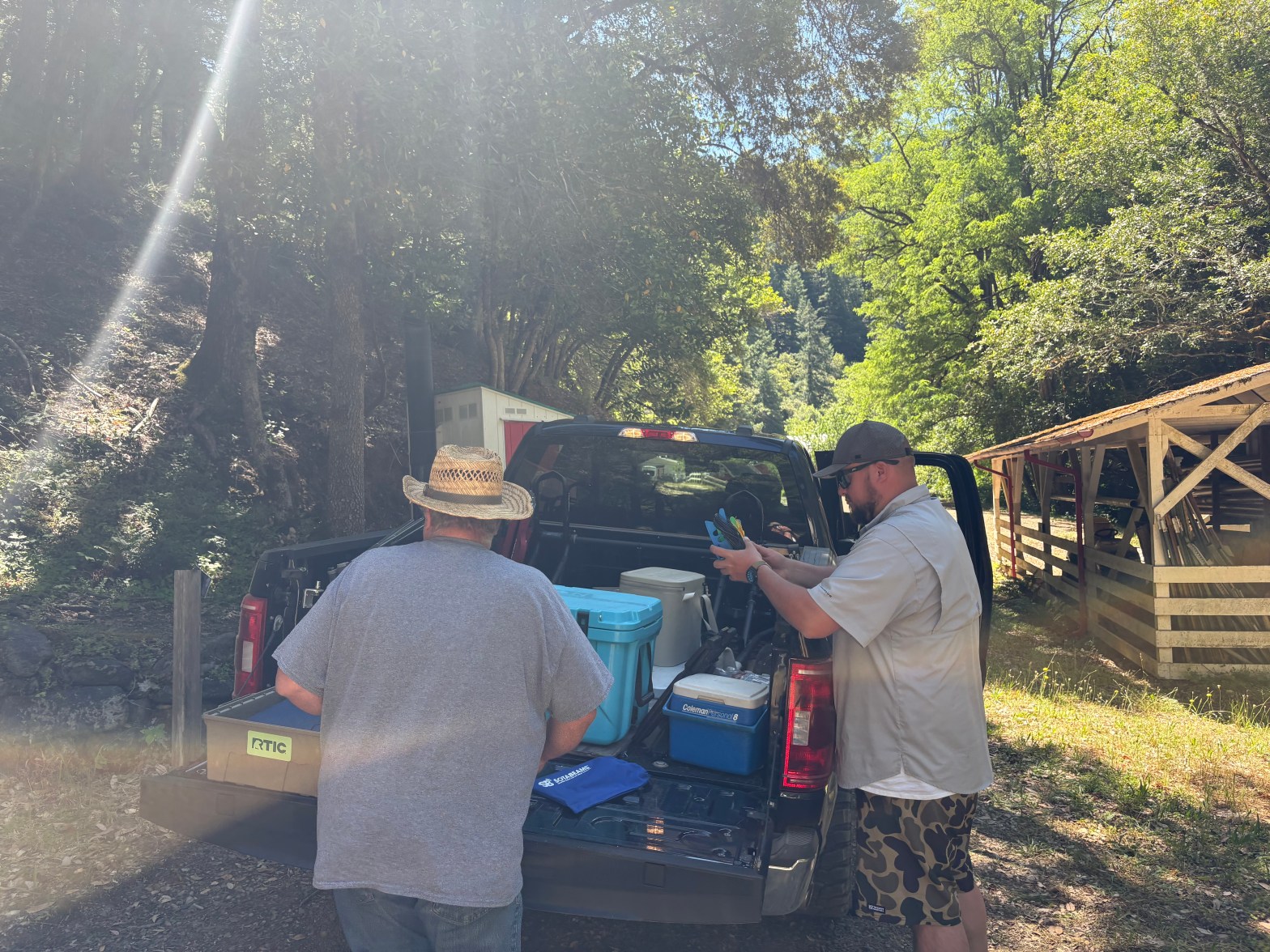
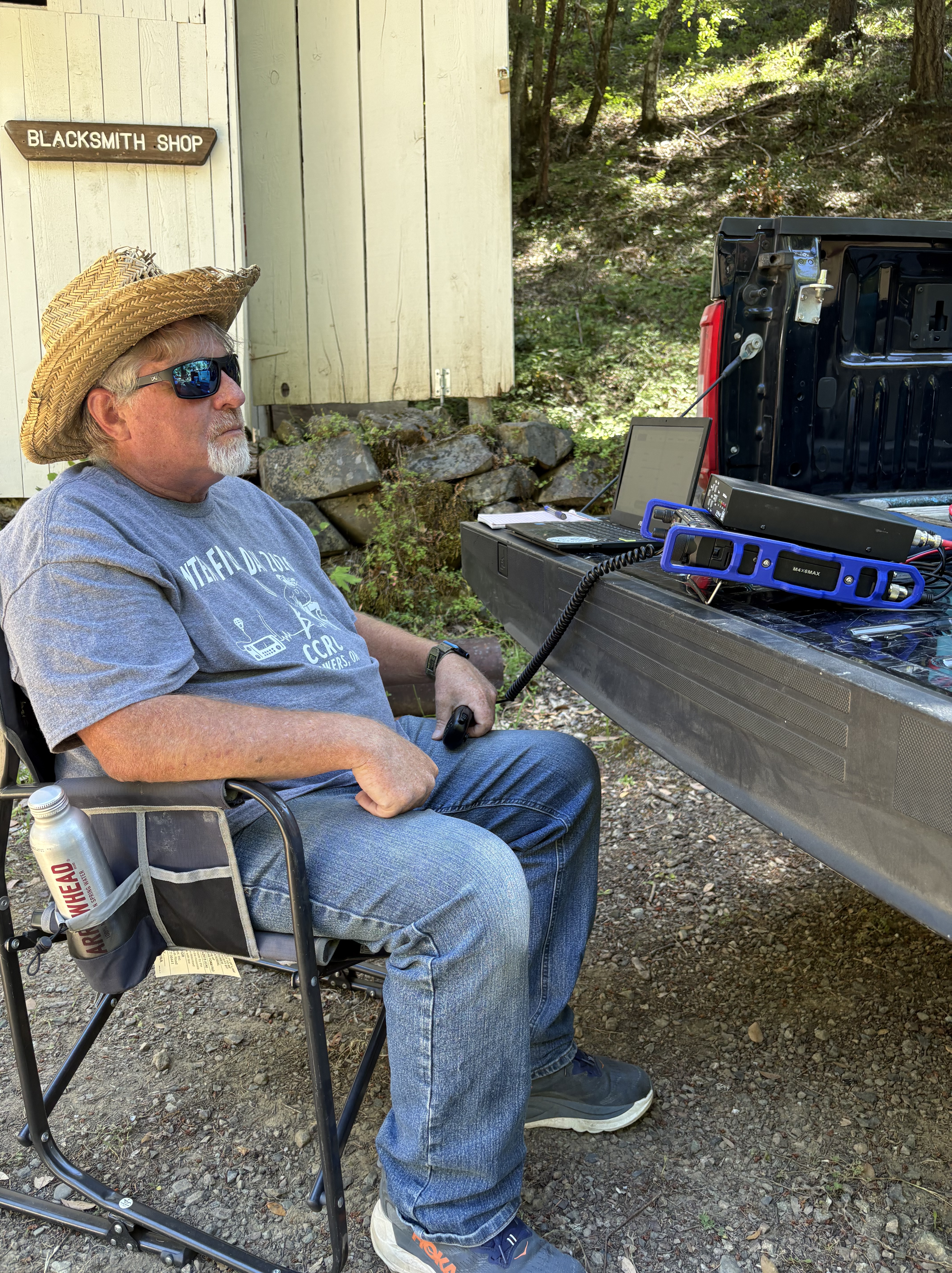
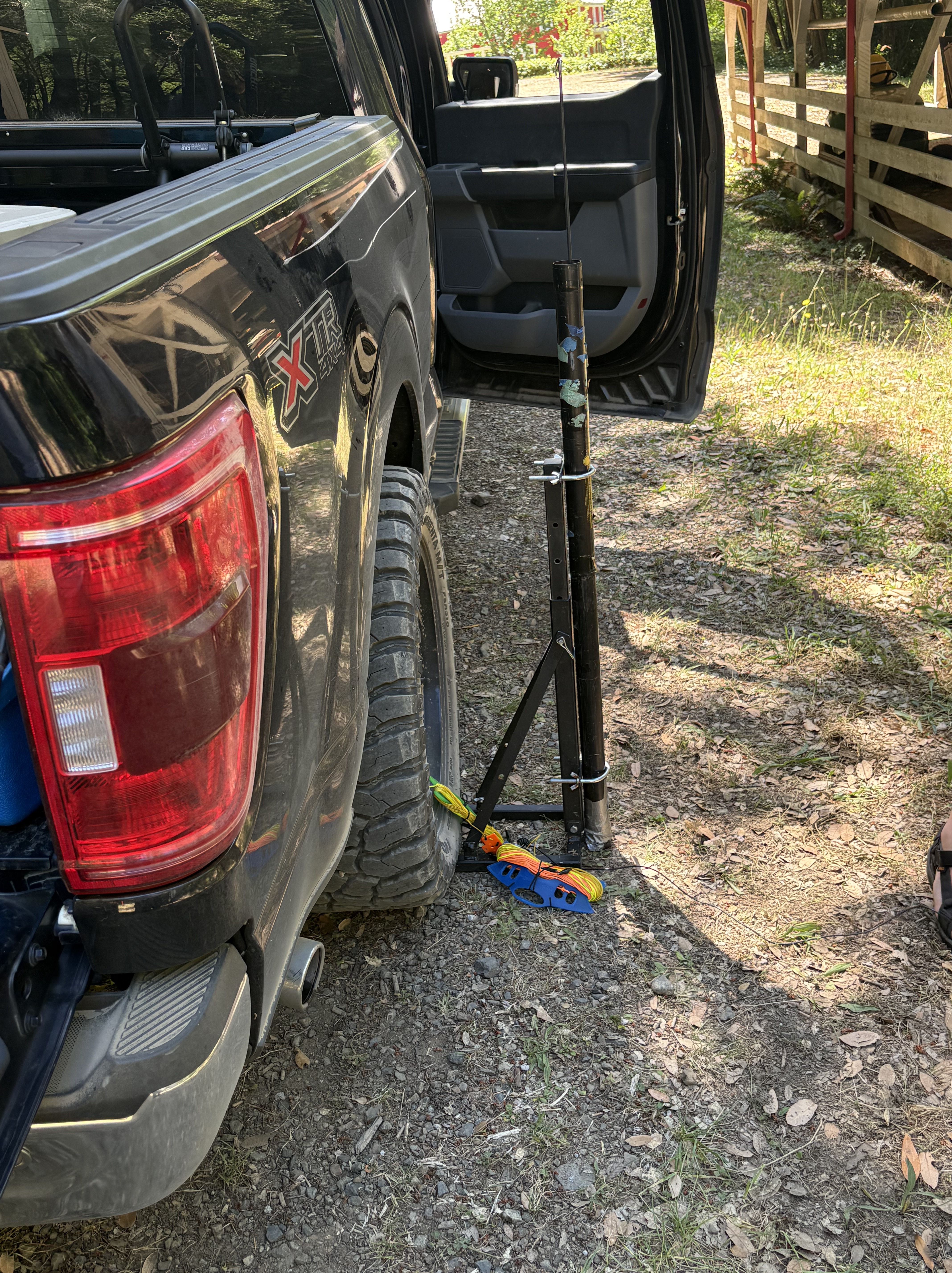
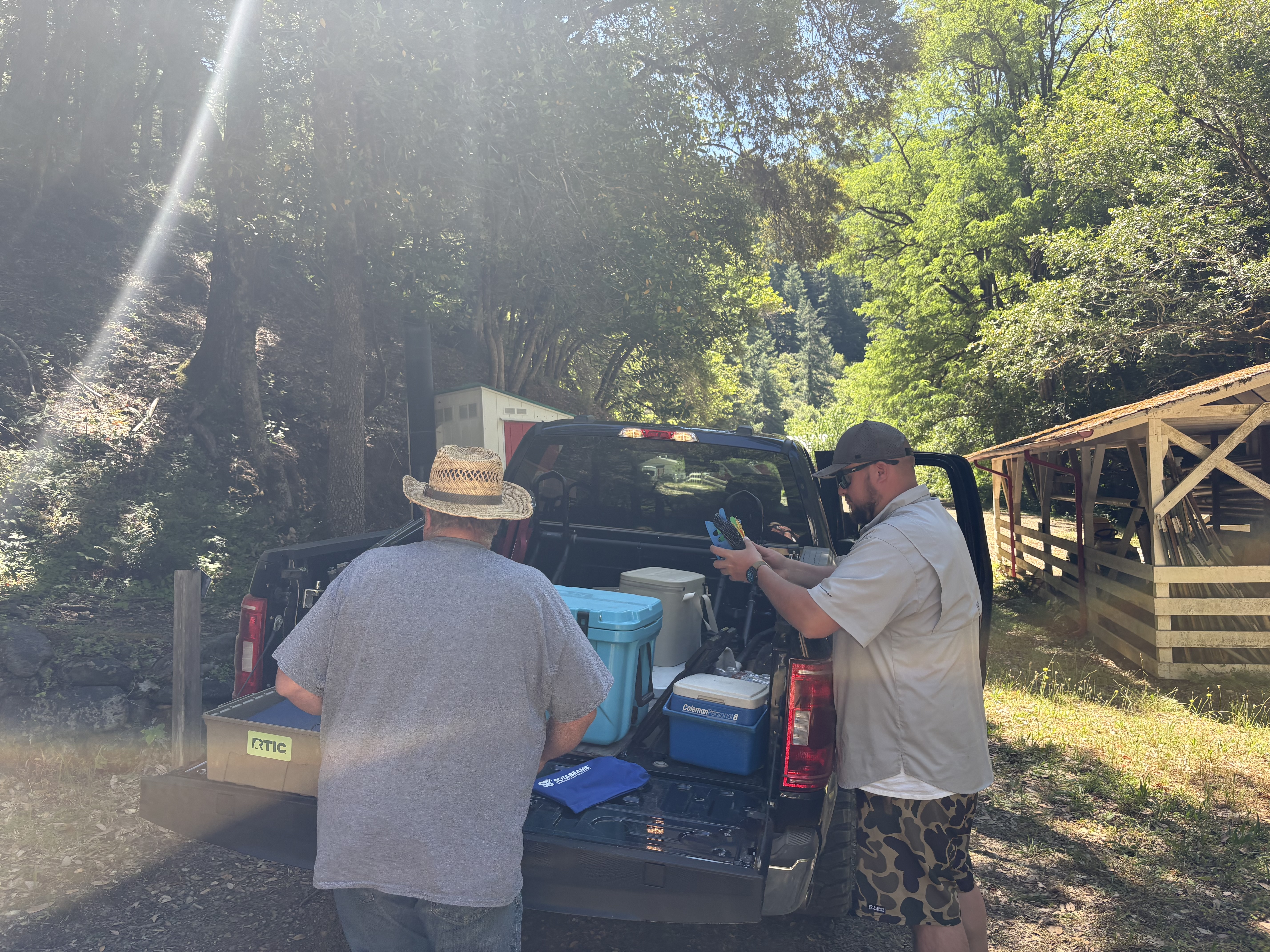
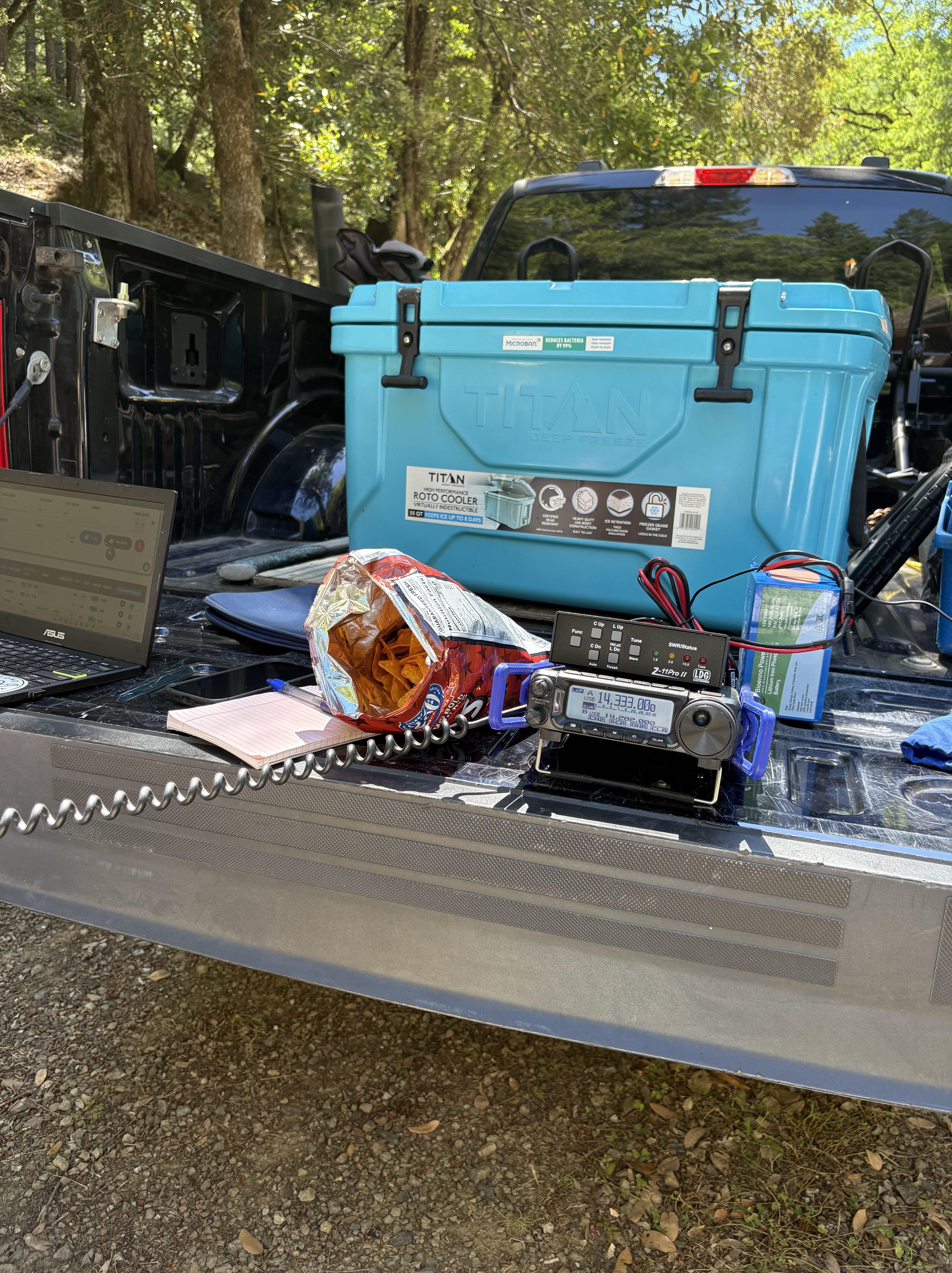
Kelley W7FCM and I KK7WXV operated the station from about 0800 Saturday until after 4PM. We had a Yeasu FT 2980 feeding a high gain VHF stubby antenna on a 20 foot mast. At the end of the day, we decided Kelley’s mobile equipment in his pickup was plenty. In fact, Net Control said it sounded better!
Our job was accounting riders registered to do the Arrastra Saddle and back to Powers route – As well as – those that continued beyond Arrastra and around Cruiser Loop.
Early trouble with the repeater made copying messages difficult. And we ran the transceiver at full 80watts power for a bit. But the repeater issue was resolved by Joe WA7JAW. (Amazing that bit.) For most of the day we operated at 40W.
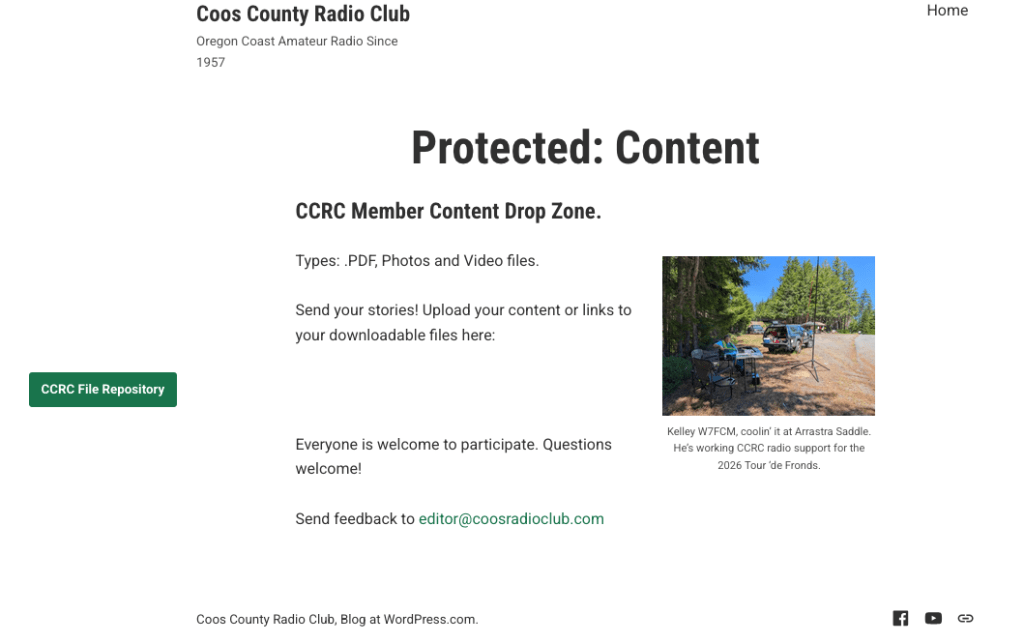
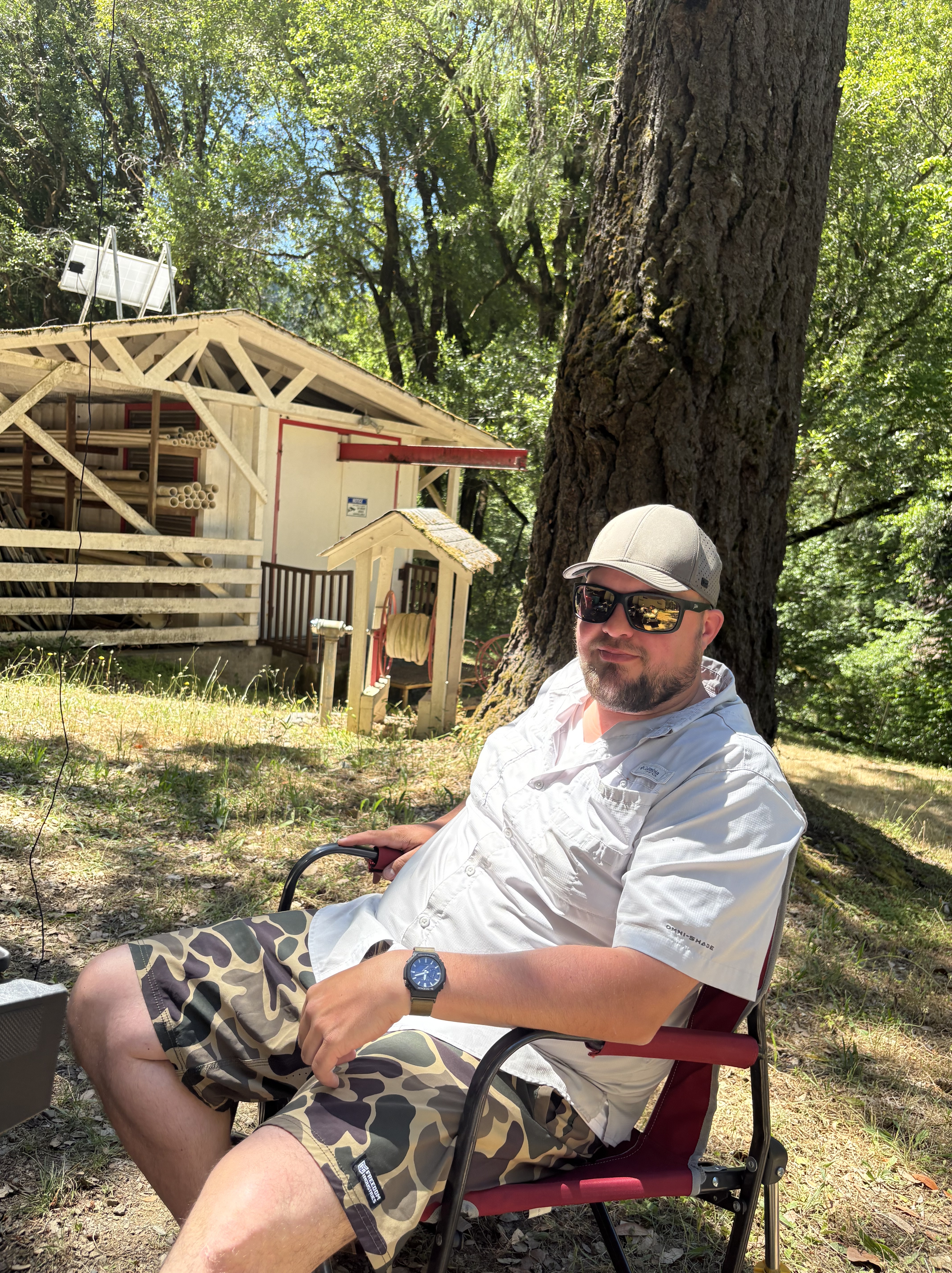
Kelley W7FCM, coolin’ it at Arrastra Saddle during the 2026 Tour ‘de Fronds.
Because of topology, the Iron Mt. Repeater is unreachable from some areas of the Cruiser Loop. For a couple of hours to start we relayed a few messages from Zach K7FC to Net Control K7CCH. Zach, positioned somewhere between us was taking messages on simplex from the station at the bottom of the loop.
I felt like the whole situation was great practice and was grateful to observe.
Once the repeater interference problem was resolved, Zack could reach Net Control directly.
The sun moved higher and we were getting cooked. By about 2PM I’d moved a chair into the shade. We soon schlepped the whole kit to the shade to get comfortable. By then we were really focused on making sure we caught each Cruiser Loop rider number before they slipped past headed back to Powers.
One thing we agreed – we will have a sign saying “Riders Must Check IN and OUT.”
Most of the participants stopped for refreshments for 30 minutes or so. As a result, for hours there was a mix of Saddle riders and Loop riders hanging around. It was difficult to keep track of who went where. And to top it off, some of the Saddle riders went part way down into Cruiser loop before turning back.
Please share your station report with our “Currents” news feed by uploading your photos, videos and .pdf’s. Visit the URL:
Note: “Protected” means contributors must use the Club password to access the file upload.
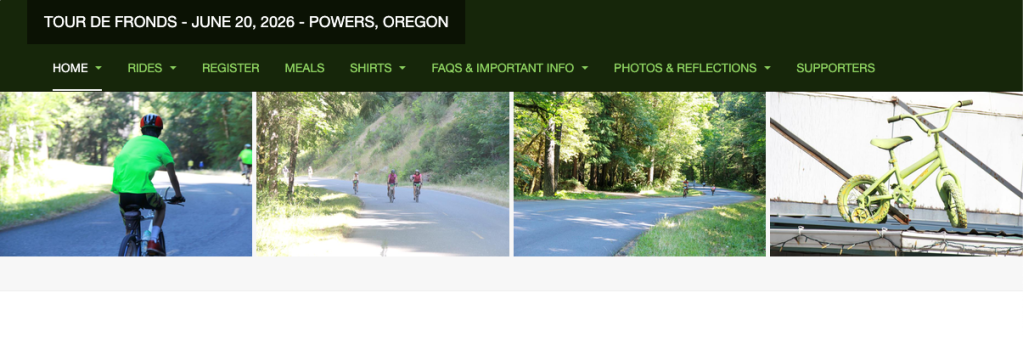
Coos County Radio Club is supporting the ARES group doing radio-supported race communications. The event begins early Saturday morning June 20th.
Activities are happening at a number of locations. Interested observers are directed to check in with Net Control in the ARES Trailer parked at the Powers Water Treatment facility.
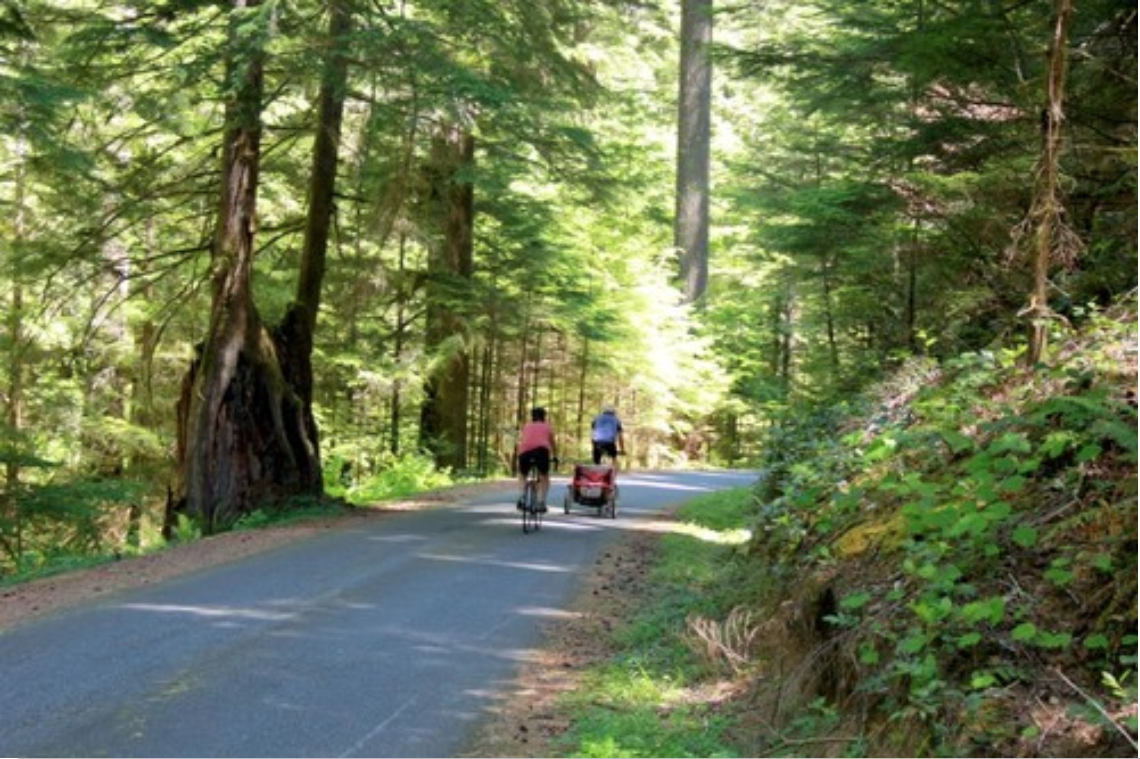
Please use caution if you’re driving on the course. Beware of cyclists.
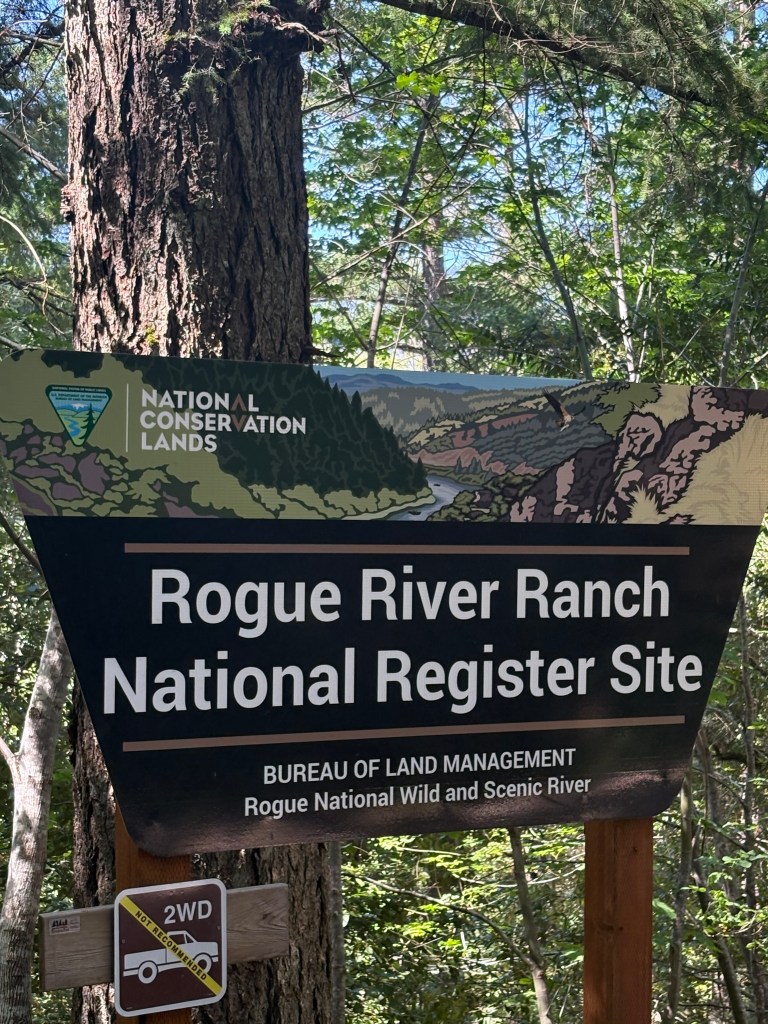
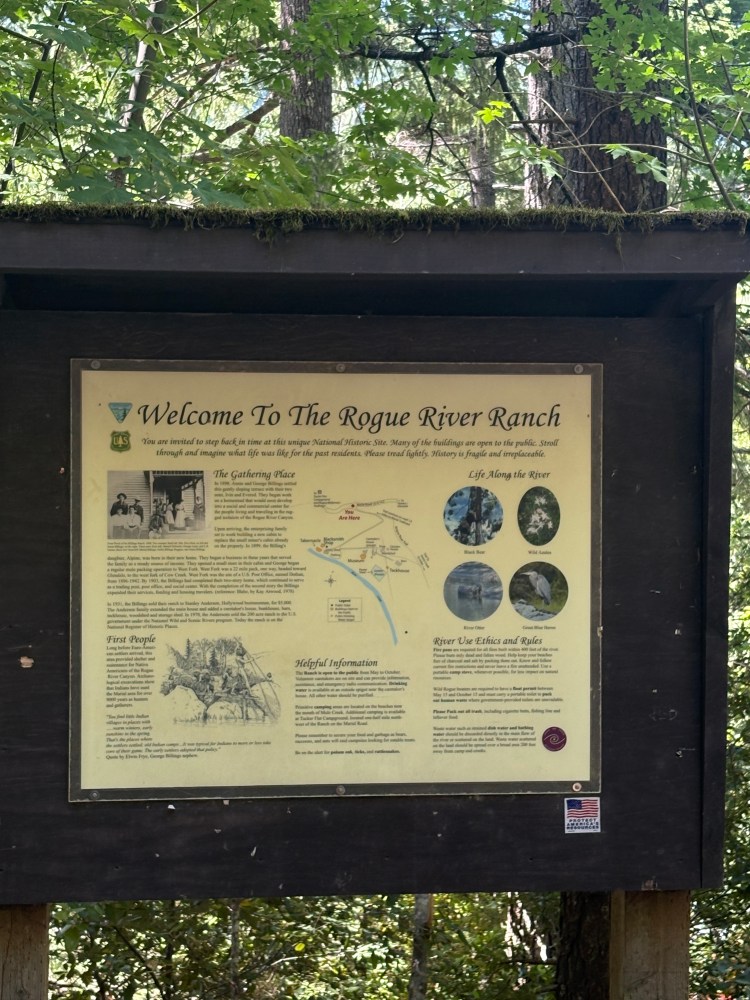
Sam (W7GNM), Zach (K7FC) and I, Kelley ( (W7FCM) did a “PXpedition” (Park Expedition) to the US-10761 Rogue River Ranch BLM historical site. A mere 65 miles from the city of Powers, this entity lies near the confluence of Mule Creek and the Wild and Scenic section of the Rogue River.
Access is limited to permitted white water rafters floating the Rogue River or by vehicle.
The trip from Powers wound through the Rogue-Siskiyou National Forest, through Eden Valley, past Mt. Bolivar (Coos County’s highest point at 4,319 feet) and onto a checkerboard of BLM and private timber lands. Although the road is paved to the intersection with Mule Creek it is in rough shape. Traveling through parts of four counties you turn onto Mule Creek and begin the winding paved then gravel road 15 miles to the ranch.
We chose a very hot day (92 degrees) to activate the entity. Only one other ham had activated it before us.
We did a tour of the ranch house, meeting many folks who walked the roughly 200 yards from the river where they had beached their rafts. After the tour, we set up in the shade of a very large Douglas fir tree. Using a linked dipole on a mast and a Yaesu FT891 we commenced to calling CQ.
After 10 contacts Zach chose the cool creek and fishing but Sam and I continued our activation. Propagation was not great. Although we did get Hawaii, France, Kansas, Canada, Wyoming and Texas, our bread and butter was Washington and California.
After 22 contacts we packed up and began the two hour journey back to Powers.
If your interested in the history of the settlement of the Rogue River canyon you can’t beat “Ilahe” by Kay Atwood. I’ve read it twice and will do so again.
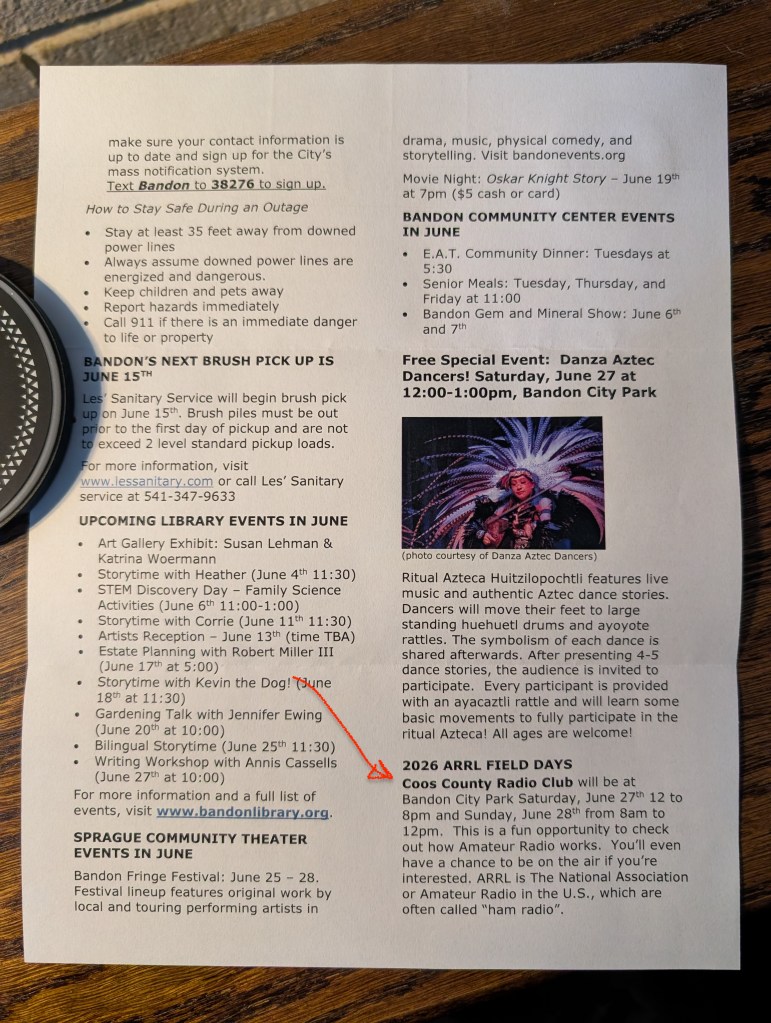
Come be a part of the most popular on-the-air operating event in amateur radio. Join the Coos County Radio Club and your community and get in on the action!
What is ARRL Field Day?
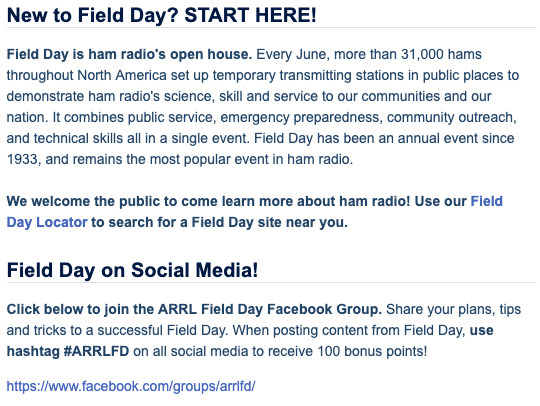
You’re Invited! ARRL Field Day is a radio communications event that brings together amateur radio operators (also called “hams”) within your community. The theme for 2026 Field Day is Amateur Radio: A National Resource – highlighting the many ways that wireless technology connects people across distances near and far. The event is part picnic, campout, practice for emergencies, informal contest, and most of all, fun! ARRL Field Day is the most popular ham radio activity held annually in the US and Canada. On the fourth weekend in June each year, more than 31,000 hams get together with their radio clubs, schools, or friends to operate from remote locations.
For many radio clubs, ARRL Field Day is one of the highlights on their annual calendar. A typical Field Day site will show off many aspects of amateur radio and its many roles.
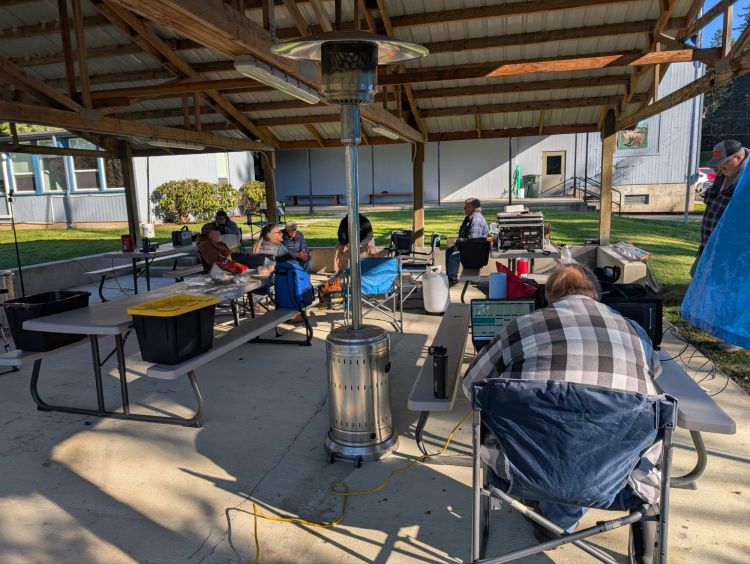
Winter Field Day at Powers High School
Some groups use Field Day as an opportunity to practice their emergency communications readiness. ARRL Field Day is an annual demonstration and invites the general public and organizations to see how amateur radio can serve in an emergency, When All Else Fails®. Hams are well-known for their communications support in real disaster and post-disaster situations. Despite the development of very complex, modern communications systems — or maybe because they are so complex — ham radio has been called into action, again and again, to provide communications in crises when it really matters.
Amateur radio also inspires the next generation of technical leaders by providing a hands-on sandbox where students gain experience in the fields of science, technology, engineering, and mathematics (STEM).
For those with a competitive spirit, Field Day stations compete to make radio contacts with as many other stations as possible while learning to operate radio equipment in challenging situations and less-than-optimal conditions. These same skills are used by hams who volunteer to help with large, preplanned, non-emergency events such as marathons and bike-a-thons; fundraisers such as walk-a-thons; celebrations such as parades, and exhibits at fairs, malls, and museums.
Who is ARRL?
With more than 137,000 members, ARRL is The National Association for Amateur Radio in the US. Our mission is to promote and protect the art, science, and enjoyment of amateur radio, and to develop the next generation of radio amateurs. ARRL and our affiliated radio clubs provide benefits to members to discover radio, to develop new skills, and to serve your local community.
What is Amateur Radio?
Often called “ham radio,” the Amateur Radio Service is a worldwide community of licensed operators using the airwaves with every conceivable means of communications technology. It is made up of people who enjoy learning and being able to transmit voice, data, and pictures through the airwaves to places near and far without depending on commercial systems. The amateur radio frequencies are the last remaining place in the usable radio spectrum where an individual can develop and experiment with wireless communications. Not only can hams build and modify their equipment, but they can also create new ways to communicate via the airwaves — and do it as a globally connected community. Many people in the hobby form lifelong friendships with people they wouldn’t have otherwise met. Many rock stars, Hollywood actors, and heads of state (and even your neighbor down the street) are ham radio operators. You can be, too! Get started at ARRL Field Day!
Courtesy of ARRL Publications
Current schedule of events for club members:
(Subject to change)
Friday June 26th
1:30 PM: Initial staging and setting up of antennas and trailers at Bandon City Park. Any available members are encouraged to be here to help.
Saturday June 27th
8:00AM: Final set up and preparations for operating.
11:00AM: Operations begin.
12:00PM: Officially open to the public…. We will not turn early birds away!
4:30PM: BBQ is fired up!
5:00PM: Members only BBQ and Potluck. Club supplies the burgers and hot dogs, please bring a side dish, your own drinks, and chairs to sit on.
** If you plan on attending the dinner/potluck you must RSVP to K7CCH@Outlook.com no later than Noon Friday June 26th. Failure to do so may result in not having enough Hamburgers. Please put “FD 26 Potluck” in the subject line of the email.
6:00PM: Operations Resume.
8:00PM: Officially closed to the public.
** Operations persist overnight.
Sunday June 28th
8:00AM: Officially open to the public
11:00AM: Operations may cease. Per rules we can only operate 24 consecutive hours due to setting up before 11:00AM Saturday. (Working on clarification)
12:00AM: Closed to the public to start tearing down. ALL ABLE MEMBERS NEEDED FOR THIS!
2:00PM: Operations cease at this time if we find we can operate past 11:00AM
2:00PM: Tear down and clean up! Leave the area cleaner than we found it! MAY BE MOVED TO 11:00AM IF WE CANNOT OPERATE UNTIL 2:00PM
What do we need club members help with before and during the event?
Security for late Friday and Saturday Night (Must stay awake): Open
Social Media: David Gerhart KK7WXV
Photographer: Everyone! Please take photos and videos!
Public Information officer/Media: Kelley Andrews W7FCM
Safety Officer: 1. Jerry Smith KK7EGZ 2. Open
Information/Welcome Table: 1. Bunny Upton KE7SAC 2. Open
Educational Activity: Open
Cook/4:30 PM Saturday: 1. Steve Humphrey KA7A 2. Open
Satellite Operations: Open
Digital Operations: Open
CW Operations: Chris Hozel W7MI, Zack Larson K7FC,
Winlink Messages: 1. Gary McElroy N6BLU 2. Open
ARRL Bulletin: Everyone! Please look at the schedule link above and try to copy the Bulletin on Friday evening. Best to record it!
More to come! Check back often.
Please email Gary at Info@coosradioclub.com to sign up for any of the positions above and if you have specific operating times you would like to reserve.
Your help is needed to make this year’s field day a success!
The lead article is a discussion about how to prepare for the declining solar cycle.
“During daytime the D-layer absorption becomes weaker, this allows 40 meters to open earlier in the afternoon. At night, the F-layer retains enough ionization to reflect these lower frequencies over long distances. This creates excellent low-band propagation that can last until dawn. Simply put, during a solar minimum, 40 meters often becomes the new 20 meters.”
Solar minimum: 40 meters often becomes the new 20 meters
Approaching Grand Solar Minimum?
The author reports that a minority within the solar science community have raised the possibility of an upcoming Grand Solar Minimum. A Grand Solar Minimum is a very long period of low solar activity. A few researchers have suggested the possibility of a future “Grand Solar Minimum,” similar to the historical Maunder Minimum of the 1600s. This phenomenon causes sunspot activity to remain low for decades. They are suggesting a Maunder-like grand minimum from around 2030 to 2110. A 2023 study analyzing 1,012 auroral records from Korean historical texts found clear evidence of a distinct 8-year cycle during the original Maunder Minimum, rather than the typical 11-year cycle. It should be noted that this prediction is a minority viewpoint within community.
Everyone please join us on the air Tuesday evening.
Round table discussion. And perhaps vote go / no go.
Regular Tuesday evening K7CCH VHF net at 7:30pm. Details here.
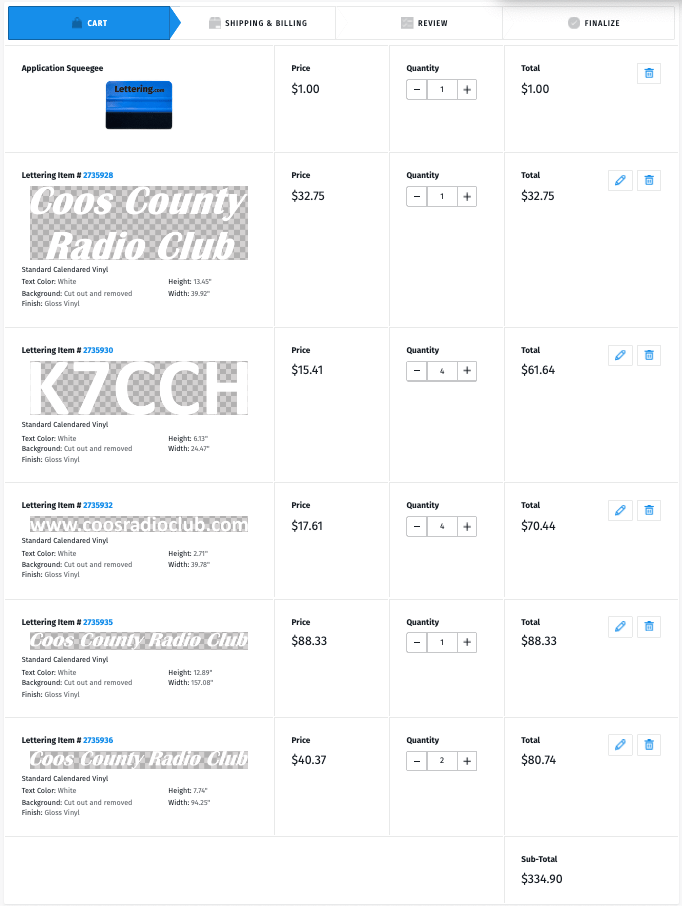
The objective: Simple, readable text and minimum cost. Those criteria are met with plain white vinyl lettering stating the club name, web URL and call sign.
Note: We plan to add QR Code graphics not accounted for in that price.
Producing a Club logo and trailer graphics for it, is another project. REPEAT A Club logo is not in scope for this effort.
Also: A Club member has funded this portion of the trailer graphics, therefore the expense is not part of the Club’s build budget.
 Coos County Radio Club