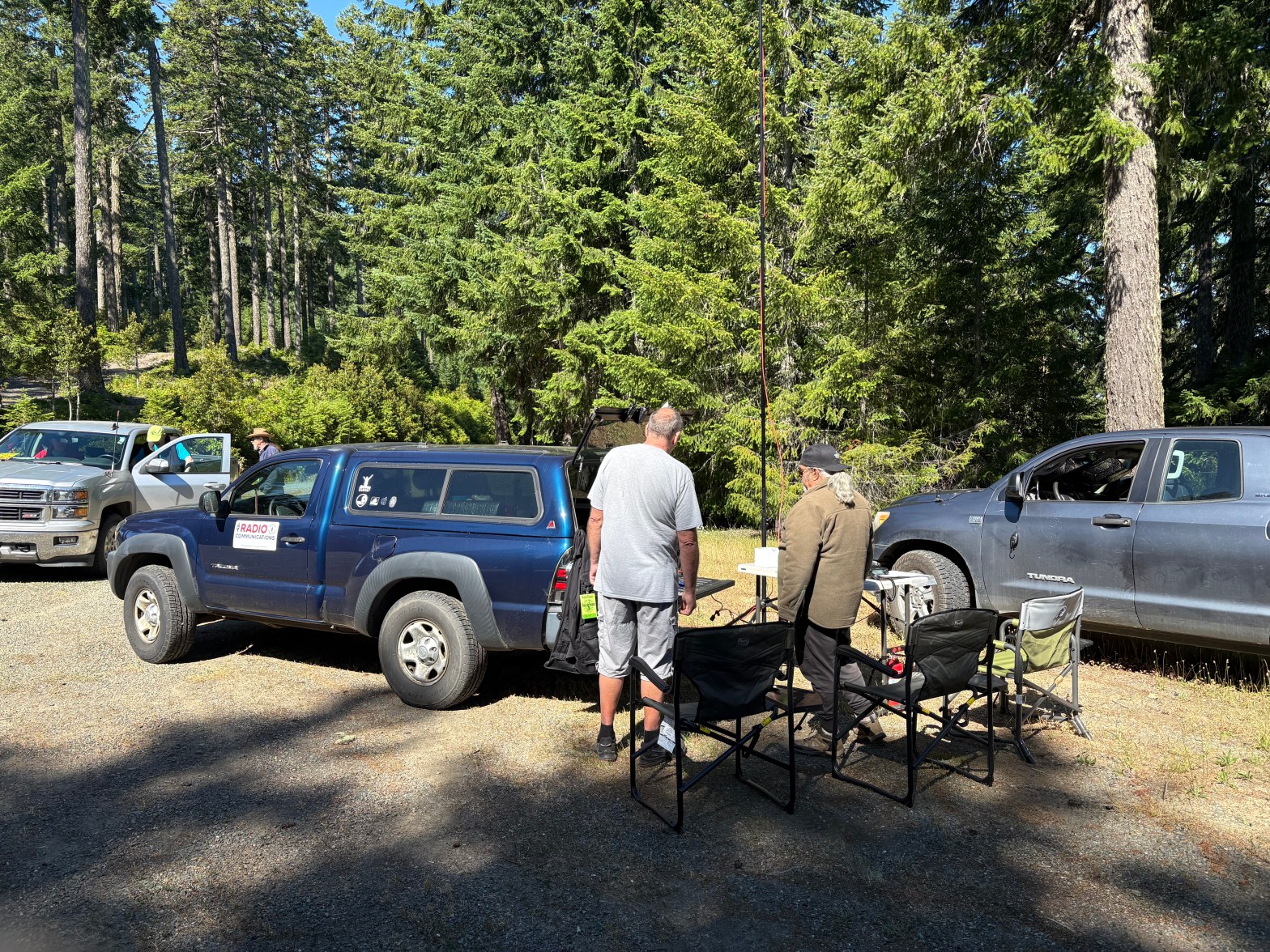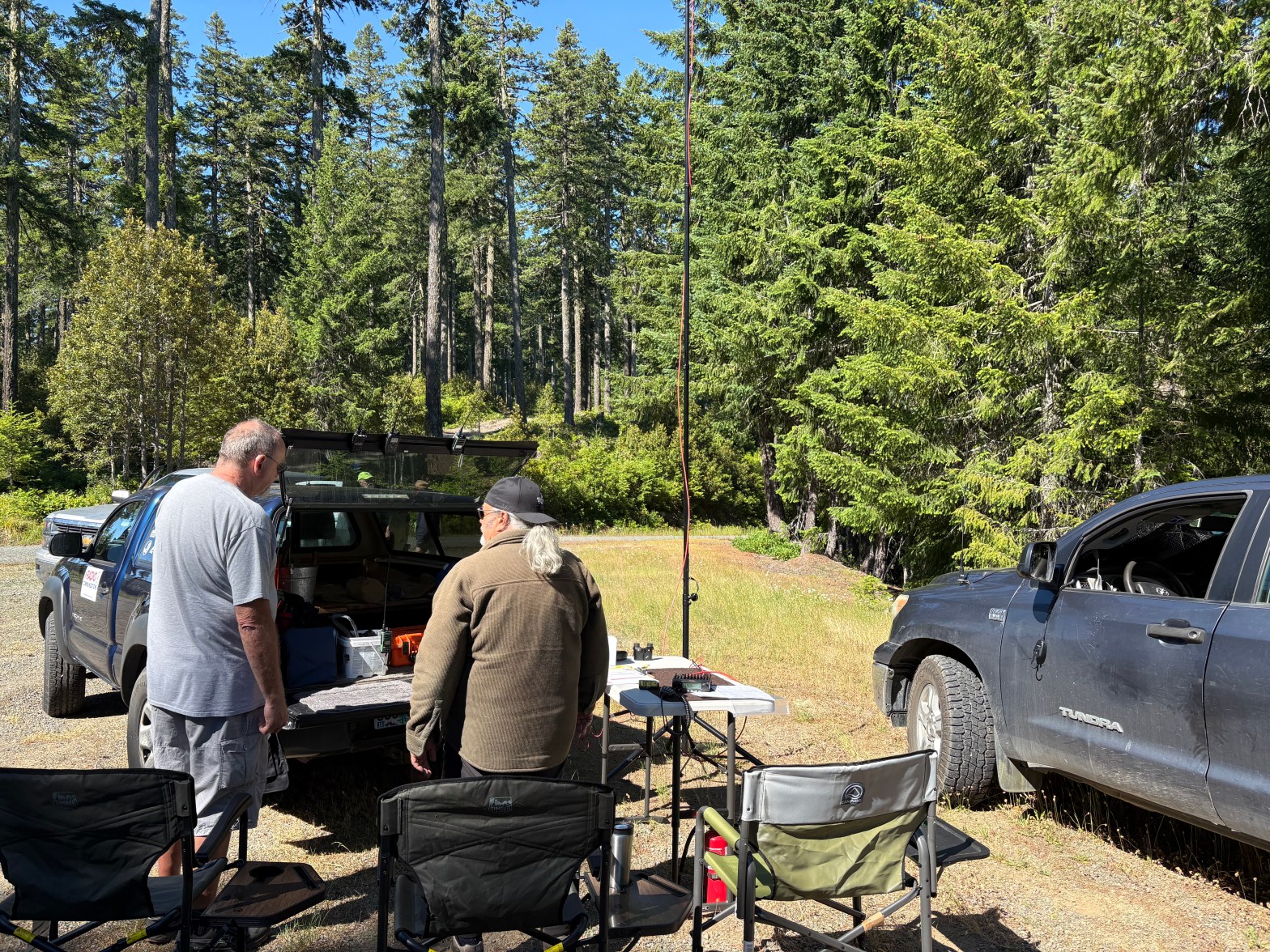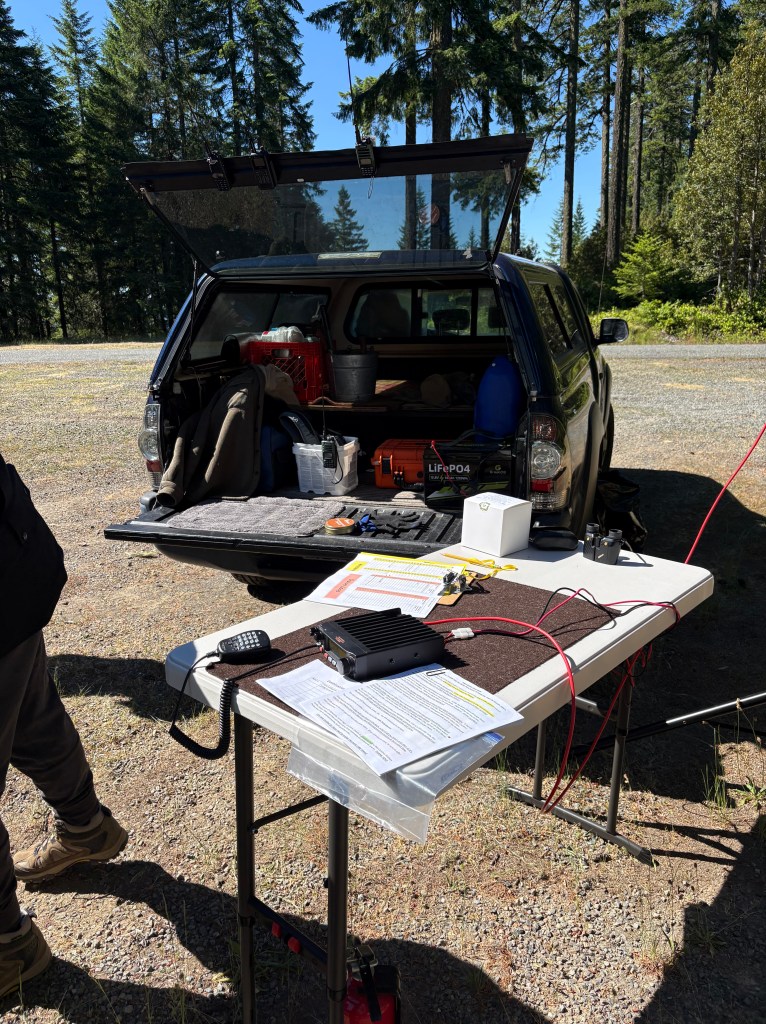
Thinking of getting your General license?
Sent from my Verizon, Samsung Galaxy smartphone
Thinking of getting your General license?
Sent from my Verizon, Samsung Galaxy smartphone
Speculation on the effect of cascading space junk collisions on Amateur Radio.
“The Kessler Syndrome is a scenario proposed by NASA scientists Donald J. Kessler and Burton G. Cour-Palais in 1978. It describes a situation in which the density of objects in low Earth orbit (LEO) becomes so high due to space pollution that collisions between these objects cascade, exponentially increasing the amount of space debris over time.”
https://en.wikipedia.org/wiki/Kessler_syndrome
What if satellite communications were suddenly squeezed off. Internet, TV and Cellular telephone backbones choked or disconnected. Could it portend a fall-back to HF radio? How handy would Amateur radios become?
SpaceX recently had a satellite go silent then quickly drop several miles. It’s on an uncontrolled trajectory estimated to de-orbit (demise) in weeks. Analysis indicates it exploded.
On December 17, Starlink experienced an anomaly on satellite 35956, resulting in loss of communications with the vehicle at 418 km. The anomaly led to venting of the propulsion tank, a rapid decay in semi-major axis by about 4 km, and the release of a small number of trackableโฆ
— Starlink (@Starlink) December 18, 2025
LeoLabs is a commercial group that tracks as many things in orbit as it can see with private space radar. They first estimated the debris at tens of shards. The guess has increased to some thousands.
https://platform.leolabs.space/visualization
Zoom in/out, turn the globe. Click on objects in the tool. It lists what they are.
Other experts offered the event didn’t seem like a spontaneous onboard failure, but almost certainly an impact. Perhaps an impact that ignited a fuel explosion propelling the apparatus into a decaying orbit. The speculation centers on the high degree of SpaceX orbiter reliability.
The visualization also shows debris regions. Precursors to an as yet narrowly avoided, Kessler Syndrome?
Question: How long after a Kessler Syndrome event would it be too dangerous for people to fly into space?
Answer*:
If a full Kessler event (a runaway chain reaction of collisions) occurred today, the answer depends entirely on how high the debris orbits earth. Space isn’t a single “room”; it’s a series of shells, and each shell has a different “cleaning cycle.”
Because there is no “janitor” in space, we rely on the Earthโs atmosphere to drag debris down. The higher the altitude, the thinner the air, and the longer the debris stays.
Contrary to the movie Gravity, a Kessler event doesn’t happen in 90 minutes. Experts describe it more like a “slow-motion train wreck.”
Even in a “full” Kessler scenario, humans could likely still launch through the debris to go to the Moon or Mars. A rocket only spends a few minutes passing through the danger zone. Itโs like running across a busy highwayโit’s incredibly risky and requires perfect timing, but you aren’t “stuck” forever. However, staying in orbit (like on a space station) would be impossible because you are a stationary target in a shooting gallery.
*Gemini AI
The FCC allocated a new chunk of the 60m band to amateurs in the US.
The action opened 5351.5 – 5366.5 kHz (60 meters) to the amateur service on a secondary basis with a permitted power of 9.15 watts ERP.
The Commission also authorized amateurs to continue using four existing channels outside of the 5351.5 – 5366.5 kHz band centered on 5332, 5348, 5373, and 5405 kHz on a secondary basis with a permitted power of 100 watts ERP.
There are no antenna restrictions but antenna gain must be used to calculate ERP.
General class license holders and above will receive the new privileges 30 days after publication to the National Register.
As club members may be aware, there are no DMR VHF repeaters in the Coos County area. (At least to this editor’s knowledge.) If your HT has DMR mode, that mode is basically useless on the local air unless you have a friend and both radios are programmed correctly to use DMR.
However! DMR is a great way for Technician class operators to make contacts around the world. If you’re curious about DMR, it’s easy to jump in with nothing more than a web browser.
What is DMR? Well, as an amateur radio digital mode, the encoding improves weak signal reception. Also the packets are designed to be sent over IP networks (E.g the internet, VoIP.) On basic VHF/UHF FM radio, communication is “simplex” – one party talks at a time. DMR is duplex – allowing two simultaneous speakers. It’s done with TDM. Time Domain Multiplexing – just like analog telephones or POTs. “Plain old Telephone Service.”
“DMR (Digital Mobile Radio) in ham radio is a digital voice standard, adapted from commercial use, that allows two simultaneous conversations (time slots) on a single frequency, offers clearer audio, extended battery life, text messaging, GPS, and connects repeaters via the internet, providing enhanced features over traditional analog radio, primarily using Tier II for licensed users.” Wikipedia. (More about Tiers follow the link…)
https://en.wikipedia.org/wiki/Digital_mobile_radio
BrandMeister and TGIF DMR are carrier networks (requiring call sign login to chat) are the top DMR services. Users that login with their Call Sign and have registered for a DMR ID at RadioID.net with can converse on the DMR network.
Covering them both is a website where visitors can view the map and listen (only) to talk groups on either system – with out a call sign. See DMRMap.APP
https://dmrmap.app/#tg=3141&network=brandmeister

Brandmeister Talk Group 3141 (shown above) links the internet to the West Oregon DMR repeater network. Check out the “Happy Hour” Net at 5PM daily.
DMR is used on the amateur radio VHF and UHF bands, started by DMR-MARC around 2010. The FCC officially approved the use of DMR by amateurs in the US in 2014.
In amateur spaces, Coordinated DMR Identification Numbers are assigned and managed by RadioID Inc. Their coordinated database can be uploaded to DMR radios in order to display the name, call sign, and location of other operators.
Internet-linked systems allow users to communicate with other users around the world via connected repeaters, or DMR “hotspots.” Such systems are often based on the Raspberry Pi single-board computer.
There are currently more than 5,500 repeaters and 16,000 “hotspots” linked to the BrandMeister system worldwide.
As always! Let us know what you think. Comments and suggestions welcome. More information is available.
Yes, amateur radio DMR can operate transceiver to transceiver in a mode called simplex.
Here’s a breakdown:
Simplex Operation: In DMR simplex, two radios communicate directly with each other on the same frequency without the use of a repeater or an internet-connected hot spot. This is also sometimes referred to as “Direct Mode.”
Repeater/Network Operation: This is the most common way amateur DMR is used. A DMR repeater or personal hotspot links users to a wider network (often via the internet, like BrandMeister or Phoenix), allowing for local, regional, or even worldwide communication using Talk Groups. This is a form of duplex operation where the radio transmits on one frequency and receives on another.
Key Points for DMR Simplex:
Settings Required: Unlike simple analog FM simplex, DMR simplex requires both transceivers to have the same frequency, Color Code, and Talk Group ID programmed.
Color Code: A digital equivalent to a CTCSS/PL tone, used for system access.
Talk Group ID: Typically Talk Group 99 is designated for simplex use in amateur radio, though any shared Talk Group ID would technically work if all parties are programmed to it.
Range: As with any simplex mode, the range is limited by terrain, power output, and antenna efficiencyโit’s strictly line-of-sight or slightly beyond.
TDMA: Even in simplex, DMR uses its Time-Division Multiple Access (TDMA) structure. On some radios, a transmission in simplex mode may use both time slots, while on others, it might only use one. However, the requirement is that both radios must be programmed to the same time slot (e.g., Slot 1 or Slot 2).
So, while DMR is famous for its wide-area networking through repeaters and hotspots, it absolutely maintains a direct, radio-to-radio simplex capability for local communication.
That is a great question. The DMR radio market is very active, especially for amateur radio operators. The radios available can generally be split into three main categories: Feature-Rich Handhelds (HTs), Budget-Friendly Handhelds, and Mobile Radios.
Here is a list of popular and well-regarded DMR-capable amateur radios across those categories:
Handhelds are the most common entry point for DMR. They are portable and generally dual-band (VHF/UHF).
| Category | Brand/Model | Key Features/Notes |
|---|---|---|
| Feature-Rich/Best Value | AnyTone AT-D878UVII Plus | Widely considered the most popular DMR handheld. Offers Dual-Band, Dual-Mode (Analog/DMR), built-in GPS, Bluetooth PTT, and supports a massive contact list (up to 500,000). |
| Alinco DJ-MD5XTG | Highly capable DMR HT, often sharing similar internal firmware with Anytone. Available with GPS and APRS support. | |
| Budget/Entry-Level | Radioddity GD-88 | Dual-Band, GPS/APRS, and is well-regarded for its cross-band repeat feature and large contact list capacity. |
| Retevis RT3S / TYT MD-UV380/390 | Very popular and affordable starting radios. They are often recommended for use with the OpenGD77 third-party firmware, which greatly enhances their features and usability for amateur radio. | |
| Baofeng DM-1701 | One of the most budget-friendly DMR radios, also frequently upgraded with the OpenGD77 firmware for better performance. | |
| Commercial Brands | Motorola XPR Series | High-quality commercial radios (e.g., XPR 6550, XPR 7550) that are often available used. Known for superior build quality and audio, but often require commercial programming software (CPS) and may have limitations on channel/contact capacity for ham use. |
| Hytera PD Series | Commercial-grade, known for ruggedness and reliability. |
Mobile radios are typically higher power (20Wโ50W) and designed for use in vehicles or as base stations.
| Brand/Model | Key Features/Notes |
|---|---|
| AnyTone AT-D578UVIII Plus | Extremely popular Dual-Band/Dual-Mode mobile radio. Features high power (50W), built-in GPS, Bluetooth, and often includes Full Duplex capability (allowing you to talk and listen simultaneously like a phone call on V/U). |
| Radioddity DB25-D | A compact mini mobile radio, Dual-Band, Dual-Mode, with GPS/APRS support. A good option for smaller vehicles. |
| Retevis RT90 | A full-power (50W) dual-band DMR mobile radio with GPS and dual-mode functionality. |
| Motorola XPR 5550e | Premium commercial mobile radio, often used in amateur radio for its quality, though it requires specific programming for ham use. |
Do you have a specific budget or desired form factor (handheld or mobile) in mind that I could use to narrow down the best recommendation for you?
Just a reminder that if you want to pay Coos County Radio club dues and receive a charitable contribution tax break in 2025?
Everyone is welcome to pay online before the end of the year via Paypal or credit card at these convenient links:
Dues
Sorry everyone but please ignore the previous post about having the meeting on the December 18th. I had forgotten about the SWORA VE Test session that happens on the third Thursday of the month which many of us attend as VE’s.
I have once again re-scheduled the CCRC Club Meeting, this time to next Wedneday, December 10th at 5pm for social and 6pm meeting start. I am very sorry for the confusion and changes. I hope everyone can make it as choices for rescheduling is limited.
Gary N6BLU
Hey y’all.
Per Gary N6BLU:
For reasons that can’t be altered having to do with the restaurant, the space we usually gather in is not available at our scheduled time.
Therefore our monthly dinner meeting is rescheduled for the evening of Thursday December 18th.
Again, the Monthly club meeting has been rescheduled.

Link: Article In “The Register”
Amateur Radio Digital Communications (ARDC) is a private foundation that exists to support amateur radio and digital communication science and technology. We do this through making grants (including support for scholarship programs and research & development projects) and managing 44Net.
The Internet Engineering Task Force Organization
The Internet Engineering Task Force (IETF), founded in 1986, is the premier standards development organization (SDO) for the Internet. The IETF makes voluntary standards that are often adopted by Internet users, network operators, and equipment vendors, and it thus helps shape the trajectory of the development of the Internet. But in no way does the IETF control, or even patrol, the Internet.